
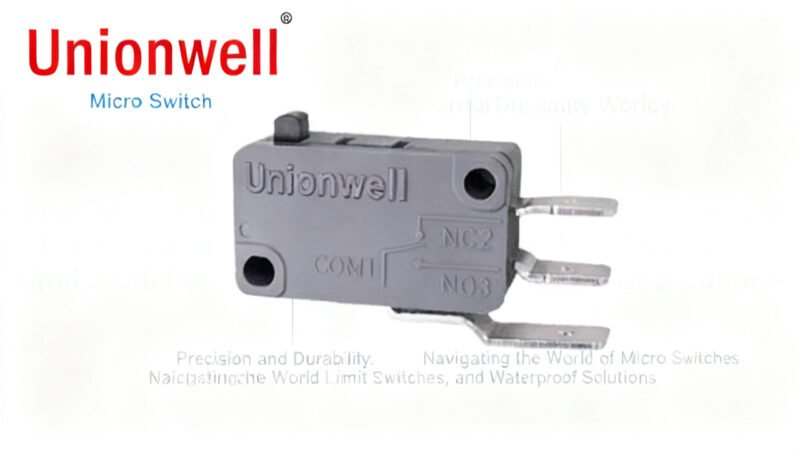
In the intricate landscape of modern industrial and commercial systems, the humble switch plays an indispensable role. More specifically, micro switches are the unsung heroes ensuring precision, reliability, and safety across countless applications. From automotive systems to intricate medical devices, and heavy-duty industrial machinery, these compact components are the critical interface between physical action and electrical response. Understanding their nuances, variants like limit switches, and specialized forms such as waterproof micro switches, is paramount for engineers and procurement professionals seeking optimal performance and longevity.
What Defines a Micro Switch?
At its core, a micro switch is a small, sensitive snap-action switch, characterized by its rapid contact closure and opening, regardless of the speed of the actuator. This ‘snap-action’ mechanism provides a consistent, repeatable actuation point, making them ideal for applications requiring high precision and reliability over millions of cycles. Typically featuring a lever or plunger actuator, micro switches convert mechanical movement into an electrical signal, controlling circuits with exceptional accuracy. The robust design and consistent performance are why they are a go-to choice for detection, safety, and control functions.
The Critical Role of a micro switch manufacturer
The quality and performance of these vital components are directly tied to the expertise of the micro switch manufacturer. A reputable manufacturer doesn’t just produce switches; they engineer solutions. This involves rigorous research and development, selection of high-grade materials, precision manufacturing processes, and stringent quality control. Manufacturers like Unionwell, for instance, are known for their commitment to innovation, offering a diverse portfolio that meets various industry standards and specific application demands. Choosing an experienced micro switch manufacturer ensures access to components that deliver on durability, electrical ratings, and environmental resilience, ultimately contributing to the reliability of the end product.
Specialized Applications: The Limit Switch
A crucial variant in the micro switch family is the limit switch. While sharing the fundamental snap-action mechanism, limit switches are specifically designed to detect the presence or absence of an object, or to monitor the limits of travel for moving parts in machinery. They are robustly constructed, often featuring heavier-duty enclosures and a wider array of actuator types (e.g., roller plungers, rotary levers, fork levers) to withstand demanding industrial environments. In industrial automation, a limit switch is indispensable for:
- Position Sensing: Confirming the exact position of a component on an assembly line.
- Safety Interlocks: Ensuring machinery only operates when safety guards are in place.
- Counting and Detection: Tracking product movement or detecting material presence.
- Machine Control: Initiating or halting processes based on mechanical limits.
Their reliability in harsh industrial settings makes them fundamental to the safe and efficient operation of countless automated systems, from conveyor belts and robotics to heavy presses and packaging machines.
Conquering Harsh Environments: The waterproof micro switch
Many applications operate in challenging conditions where exposure to moisture, dust, or other contaminants is unavoidable. This is where the waterproof micro switch becomes indispensable. Engineered with advanced sealing technologies, these switches are designed to prevent ingress of liquids and particulates, ensuring consistent performance and extended operational life in adverse environments. Key features often include:
- IP Ratings: Compliance with Ingress Protection (IP) standards (e.g., IP67, IP68) indicates their ability to withstand submersion or jet sprays.
- Sealing Materials: Use of high-quality epoxy potting, O-rings, and sealed terminals to create an impenetrable barrier.
- Corrosion Resistance: Materials selected to resist rust and chemical degradation.
Applications for a waterproof micro switch are diverse, spanning outdoor equipment, marine applications, automotive systems (e.g., door locks, window controls), agricultural machinery, and even certain medical devices requiring sterilization. Their ability to maintain electrical integrity in wet or dusty conditions is critical for both functionality and safety.
Selecting the Optimal Switch for Your Needs
Choosing the right micro switch, limit switch, or waterproof micro switch requires careful consideration of several factors:
- Electrical Rating: Matching voltage and current requirements.
- Operating Force: The force required to actuate the switch.
- Actuator Type: Plunger, lever, roller, etc., depending on the mechanical interface.
- Environmental Conditions: Temperature range, presence of dust, moisture, or corrosive agents.
- Lifecycle: The expected number of operations.
- Mounting Options: Panel mount, PCB mount, screw mount, etc.
Engaging with a knowledgeable micro switch manufacturer can provide invaluable guidance, ensuring the selected component perfectly aligns with the application’s specific demands.
The Future of Precision Switching
As industries continue to automate and demand higher levels of precision, reliability, and miniaturization, the evolution of micro switches will remain a critical area. Innovation in materials, sealing technologies, and smart functionalities will further enhance their capabilities, ensuring they continue to be the cornerstone of robust and efficient control systems worldwide. Whether it’s a standard micro switch, a heavy-duty limit switch, or a resilient waterproof micro switch, these components are fundamental to the operational integrity of countless devices and machines that power our modern world.