
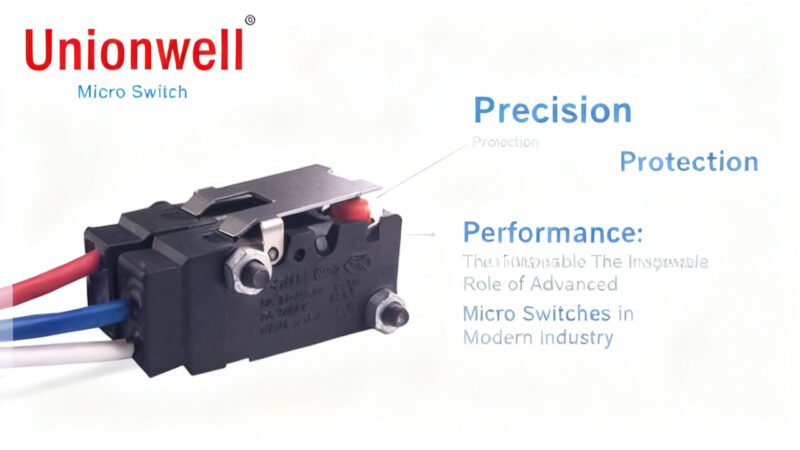
In the intricate tapestry of modern industrial operations, countless components work in unison to ensure efficiency, safety, and reliability. Among these, the micro switch stands out as a deceptively simple yet profoundly critical device. These small, sensitive switches are the unsung heroes responsible for converting mechanical motion into precise electrical signals, acting as the fundamental building blocks for control, automation, and safety systems across virtually every sector. From the smallest consumer appliances to the most robust industrial machinery, their rapid actuation and consistent performance are paramount.
The Foundation of Control: Understanding Micro Switches
At its core, a micro switch, often referred to as a miniature snap-action switch, is designed to operate with minimal force and provide a rapid, repeatable change in contact state. This snap-action mechanism is crucial, ensuring a swift break and make of electrical contact regardless of the speed of actuation. This characteristic minimizes arcing, prolongs contact life, and delivers highly reliable switching. Their compact size, durability, and versatility make them indispensable for applications requiring precise position sensing, overtravel protection, or simple on/off control.
The Mark of a Superior micro switch manufacturer
The performance of any system relying on micro switches is directly tied to the quality of its components. A leading micro switch manufacturer distinguishes itself through an unwavering commitment to precision engineering, robust material selection, and rigorous quality control. This involves:
- Advanced R&D: Investing in research and development to innovate new designs, enhance durability, and explore miniaturization without compromising performance.
- Material Excellence: Utilizing high-grade plastics, durable metals, and advanced contact materials to withstand diverse operational environments and extend mechanical and electrical life.
- Stringent Quality Assurance: Implementing comprehensive testing protocols, from raw material inspection to final product validation, ensuring every switch meets exacting standards.
- Customization Capabilities: Offering tailored solutions to meet specific application demands, whether it’s unique actuator types, specialized electrical ratings, or environmental protection levels.
Manufacturers committed to these principles ensure that their micro switches deliver consistent performance, longevity, and ultimately, contribute to the overall reliability and safety of the end product.
Limit Switches: Guardians of Industrial Automation
A specialized and widely adopted variant of the micro switch is the limit switch. These robust devices are specifically engineered to detect the presence, absence, or position of an object within a defined area. They are the eyes and ears of industrial automation, providing critical feedback to control systems. Common applications include:
- Machine Tools: Preventing overtravel of moving parts, ensuring precise positioning in CNC machines.
- Conveyor Systems: Detecting product presence, controlling flow, and preventing jams.
- Safety Interlocks: Ensuring machine guards are closed before operation can commence, enhancing operator safety.
- Robotics: Defining movement limits and ensuring accurate arm positioning.
The durability and reliability of limit switches in harsh industrial environments are paramount, often featuring sturdy housings and various actuator types (roller levers, plungers, rotary levers) to suit different mechanical interface requirements.
waterproof micro switches: Defying the Elements
In environments where exposure to liquids, dust, or corrosive agents is a concern, standard micro switches simply won’t suffice. This is where waterproof micro switches become indispensable. Designed with superior sealing technologies, these switches protect internal components from ingress, ensuring reliable operation even under challenging conditions. Their efficacy is often quantified by an Ingress Protection (IP) rating, with IP67 being a common standard, signifying complete protection against dust and temporary immersion in water.
Applications for waterproof micro switches are diverse and critical:
- Outdoor Equipment: Agricultural machinery, construction vehicles, lawn and garden equipment.
- Marine Applications: Boats, dock equipment, underwater sensors.
- Food Processing: Equipment that undergoes frequent wash-downs and sanitization.
- Automotive: Under-the-hood applications, door latches, and various exterior components.
- Industrial Wash-Down Areas: Manufacturing plants requiring frequent cleaning.
The robust construction and sealed design of these switches guarantee operational integrity and extend the lifespan of equipment in demanding settings.
Diverse Applications Across the Industrial Landscape
The versatility of advanced micro switches extends across a multitude of industries:
- Automotive: Found in door latches, seat belt indicators, gear shift mechanisms, and engine control systems.
- Industrial Machinery: Essential for robotics, CNC machines, packaging equipment, material handling, and safety systems.
- Medical Devices: Used in diagnostic equipment, patient monitoring systems, and surgical tools for precise control.
- Consumer Electronics: Integrated into appliances, power tools, and smart home devices.
- HVAC Systems: Regulating flow control, damper positioning, and safety cut-offs.
Key Considerations When Selecting a Micro Switch
Choosing the right micro switch is a critical decision that impacts system performance and longevity. Key factors to consider include:
- Electrical Ratings: Voltage, current, and load type (resistive, inductive) must match the application’s requirements.
- Operating Force: The actuation force required, which impacts user experience and mechanical interface design.
- Operating Temperature Range: Ensuring the switch can perform reliably within the environmental temperature extremes.
- Actuator Type: Selecting the appropriate actuator (pin plunger, lever, roller lever, etc.) for the specific mechanical interaction.
- Contact Material: Different materials are suited for various load types and life cycle requirements.
- Life Expectancy: Both mechanical and electrical cycles should meet the application’s expected lifespan.
- Environmental Protection: IP rating for waterproof, dustproof, or explosion-proof needs.
- Mounting Options: Ease of integration into the existing design.
The Future of Micro Switch Technology
As industries evolve, so too does micro switch technology. Trends point towards continued miniaturization, enabling more compact and complex designs. Integration with smart systems, such as IoT and Industry 4.0 platforms, will see micro switches providing data for predictive maintenance and enhanced operational insights. Furthermore, advancements in materials and manufacturing processes will lead to even greater durability, extended life cycles, and improved energy efficiency.
Conclusion
High-quality micro switches are more than just simple components; they are fundamental enablers of precision, protection, and performance in modern industrial and consumer applications. Whether it’s the robust reliability of a limit switch in an automated factory or the environmental resilience of a waterproof micro switch in outdoor equipment, their consistent operation is vital. For businesses seeking to ensure the highest levels of operational efficiency, safety, and long-term reliability, partnering with a reputable micro switch manufacturer that prioritizes quality, innovation, and customer-specific solutions is not just an advantage—it’s an absolute necessity.