
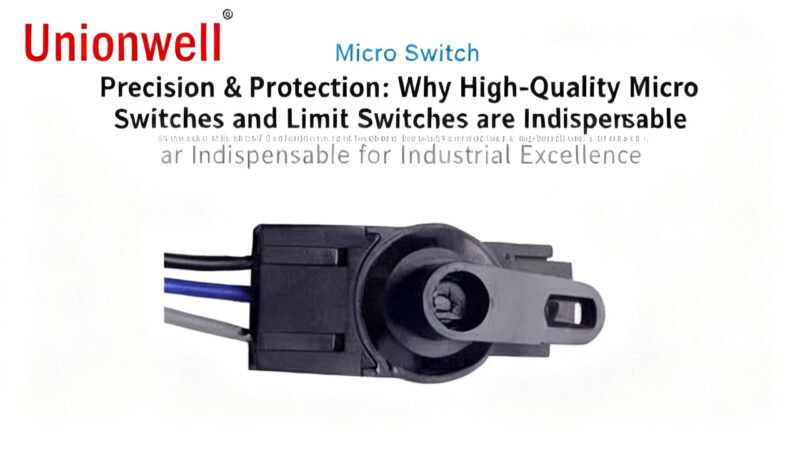
In the intricate world of industrial automation, consumer electronics, and countless other sectors, certain components operate silently, yet their failure can bring entire systems to a halt. Among these critical elements are micro switches and limit switches – tiny but mighty devices that ensure precision, safety, and reliability. For businesses operating in demanding environments, understanding the nuances of these components, especially specialized variants like waterproof micro switches, is paramount to maintaining operational integrity and achieving long-term success.
Understanding the Core: The Micro Switch
At its heart, a micro switch is a miniature snap-action switch, characterized by its rapid change of state when a small amount of force is applied to its actuator. This ‘snap-action’ mechanism provides a quick, crisp contact transfer, making it highly reliable for repetitive operations and preventing slow make/break contact that can lead to arcing and premature wear. Their compact size, high repeatability, and long operational life – often rated for millions of cycles – make them indispensable for a vast array of applications, from detecting the closure of a car door to controlling the intricate movements within a robotic arm. They serve as fundamental building blocks for precise control and safety interlocks, converting mechanical motion into a critical electrical signal.
The Power of Precision: Limit Switches in Industrial Automation
Limit switches represent a specialized and robust category of micro switches, engineered specifically for industrial environments. Their primary function is to detect the presence or absence of an object, monitor position, or determine the end-of-travel for machinery. Unlike their smaller counterparts, limit switches often feature rugged metal housings, designed to withstand physical impact, vibration, and harsh operating conditions. They come with various actuator types, including plunger, roller lever, and rod, allowing them to be tailored to specific mechanical interactions. In factory automation, limit switches are critical for controlling the movement of conveyors, ensuring safety gates are closed before machinery operates, and precisely positioning components in assembly lines. Their durability and reliability in challenging settings make them cornerstones of modern industrial control systems.
Conquering the Elements: The Necessity of waterproof micro switches
Many industrial and commercial applications expose components to severe environmental challenges, including moisture, dust, oils, and corrosive chemicals. In such scenarios, standard switches simply won’t suffice. This is where waterproof micro switches become indispensable. These specialized switches are engineered with enhanced sealing mechanisms, often achieving high Ingress Protection (IP) ratings like IP67, signifying complete protection against dust ingress and the effects of temporary immersion in water. Applications for waterproof micro switches are diverse and critical:
- Outdoor Equipment: From agricultural machinery to traffic control systems, where exposure to rain and extreme weather is constant.
- Marine and Automotive: Essential for bilge pumps, navigation equipment, car door mechanisms, and under-the-hood applications where water and fluids are present.
- Food and Beverage Processing: Vital for equipment requiring frequent wash-downs and operating in humid environments.
- Medical Devices: Ensuring hygiene and reliability in equipment that may be exposed to liquids or require sterilization.
- Industrial Cleaning Equipment: For robust performance in wet and dirty conditions.
Investing in high-quality waterproof switches prevents costly downtime, premature component failure, and ensures continuous, safe operation even in the most challenging conditions.
The Manufacturer’s Edge: Why Choosing the Right Partner Matters
The performance and longevity of micro switches and limit switches are not just a function of their design, but critically, the expertise of their manufacturer. For B2B buyers, selecting the right micro switch manufacturer is a strategic decision that impacts product reliability, safety, and ultimately, the bottom line. A reputable manufacturer distinguishes itself through several key attributes:
- Robust Research & Development: The ability to innovate and develop custom solutions that meet specific application requirements, pushing the boundaries of miniaturization and performance.
- Rigorous Quality Control: Adherence to international standards (e.g., UL, CE) and comprehensive testing protocols ensure every switch meets stringent performance and durability criteria.
- Premium Material Selection: Utilizing high-grade contacts, robust housings, and reliable sealing materials for optimal electrical and mechanical performance.
- Precision Manufacturing Processes: Advanced production lines and engineering precision are crucial for consistent snap-action, high repeatability, and extended operational life.
- Comprehensive Technical Support: Offering expert application engineering assistance, from design consultation to post-sales support, ensuring seamless integration and optimal system performance.
Partnering with a manufacturer known for its commitment to quality and innovation ensures that the switches you integrate into your systems are not just components, but reliable foundations for your products’ success.
Conclusion
Micro switches, limit switches, and their waterproof counterparts are far more than simple electrical components; they are critical enablers of precision, safety, and efficiency across the modern industrial landscape. From the smallest consumer gadget to the most complex automated factory, their reliable operation is indispensable. For businesses aiming for excellence and uninterrupted performance, the choice of high-quality switches from a trusted and experienced manufacturer is not merely an option, but a fundamental requirement for achieving operational integrity and long-term competitive advantage. Investing in superior components ensures not only the longevity of your products but also the safety of your operations and the satisfaction of your end-users.