
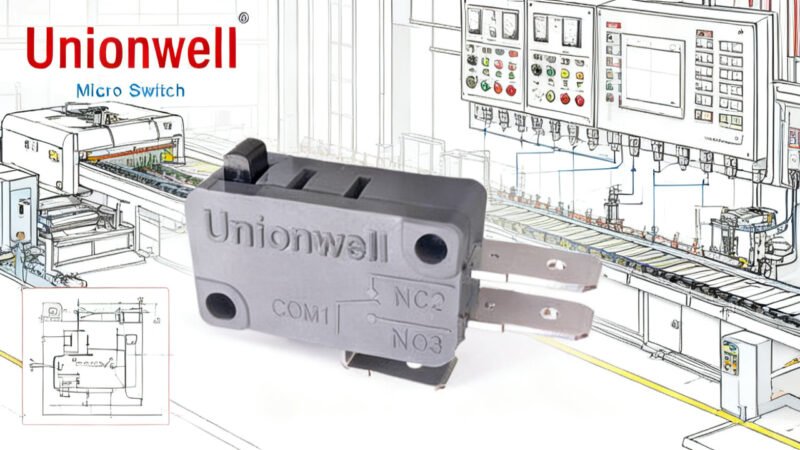
In the intricate world of industrial automation and control, the seemingly small components often hold the most significant power. Among these, micro switches and limit switches stand out as indispensable workhorses, dictating precision, ensuring safety, and driving efficiency across countless applications. For B2B buyers and engineers, understanding the nuances of these critical components, and more importantly, partnering with a reputable micro switch manufacturer, is paramount to the success and longevity of their systems.
At its core, a micro switch is a small, snap-action switch known for its rapid change of state when a small amount of force is applied to its actuator. This “snap-action” mechanism provides a distinct advantage: a rapid, repeatable switching action that is largely independent of the actuator’s speed. This characteristic makes them ideal for applications requiring precise and reliable detection of position or presence.
The versatility of micro switches is staggering. From detecting the closure of a car door to sensing the exact position of a robotic arm, their compact size, high repeatability, and robust electrical ratings allow them to be integrated into a vast array of devices. They are the silent sentinels that ensure everything from household appliances to complex industrial machinery operates as intended, providing critical feedback and control signals.
Beyond Basic Detection: The Power of Limit Switches
While sharing the fundamental principles of micro switches, limit switches are typically designed for more rugged industrial environments and specific position-sensing applications. Often encased in durable housings, they are built to withstand physical impact, vibrations, and often, environmental ingress. Their primary function is to detect the presence or absence of an object, or to monitor the limits of travel for a moving part within a mechanical system.
Consider their application in manufacturing lines: a limit switch might detect when a product has reached the end of a conveyor belt, triggering the next stage of the process. In heavy machinery, they act as crucial safety interlocks, preventing operation if a guard is open or a component is out of position. The reliability and robustness of a well-engineered limit switch are non-negotiable in these scenarios, directly impacting operational safety and productivity.
Conquering Adversity: The Necessity of waterproof micro switches
Not all environments are benign. Industries such as marine, food and beverage processing, outdoor equipment, and certain medical applications demand components that can withstand exposure to liquids, dust, and corrosive agents. This is where waterproof micro switches become not just an option, but a critical requirement.
A high-quality waterproof micro switch is designed with advanced sealing technologies, often achieving ingress protection (IP) ratings like IP67 or even higher. An IP67 rating, for instance, signifies that the switch is completely protected against dust and can withstand temporary immersion in water up to 1 meter for 30 minutes. This level of protection ensures consistent performance and extended operational life even in the harshest conditions, preventing costly downtime and equipment failure due to environmental damage.
For designers and engineers, specifying the correct IP-rated switch is crucial. It ensures that the component will not only function reliably in its intended environment but also comply with industry standards and safety regulations, safeguarding both equipment and personnel.
The Hallmarks of a Leading micro switch manufacturer
Choosing the right micro switch manufacturer is as vital as selecting the right switch itself. A leading manufacturer brings more than just products to the table; they offer expertise, reliability, and a commitment to quality that underpins the performance of your entire system.
- Unwavering Quality Control: Top manufacturers adhere to rigorous testing protocols, from raw material inspection to final product validation. This ensures consistent performance, reliability, and adherence to specified electrical and mechanical characteristics.
- Innovation and R&D: The best manufacturers invest heavily in research and development, constantly improving existing designs and developing new solutions to meet evolving industrial demands, such as miniaturization, higher electrical loads, or more extreme environmental resistance.
- Comprehensive Product Range: A diverse portfolio covering various actuator types (lever, roller, plunger), electrical ratings, operating forces, and housing materials allows buyers to find the exact switch for their specific application without compromise.
- Customization Capabilities: For unique applications, the ability to customize switch characteristics – be it a specific wire harness, a unique mounting bracket, or a tailored operating force – is invaluable.
- Certifications and Compliance: Adherence to international standards such as UL, CE, CQC, and others is non-negotiable, ensuring product safety and market acceptance globally.
- Technical Support and Partnership: A true partner provides expert technical assistance, helping engineers select the optimal switch, troubleshoot issues, and integrate components seamlessly into their designs.
- Supply Chain Reliability: In today’s global market, a stable and efficient supply chain is critical to prevent delays and ensure continuous production.
Strategic Selection for Optimal Performance
When specifying micro switches or limit switches, B2B buyers should consider several key factors:
- Application Environment: Determine if a standard, sealed, or waterproof micro switch is required based on exposure to dust, moisture, temperature extremes, and chemicals.
- Electrical Requirements: Match the switch’s electrical rating (voltage, current) to the load it will control.
- Mechanical Life and Operating Force: Consider the expected number of operations and the force available to actuate the switch. High-precision applications often demand lower operating forces and extremely long mechanical lifespans.
- Actuator Type: Select an actuator (e.g., pin plunger, lever, roller lever) that interfaces correctly with the activating mechanism.
- Mounting Configuration: Ensure the switch’s dimensions and mounting holes are compatible with the available space.
- Safety and Compliance: Verify that the switch meets all necessary industry-specific and regional safety standards.
In conclusion, micro switches and limit switches are far more than simple on/off devices; they are the critical sensory and control elements that enable the precision, safety, and efficiency of modern industrial systems. By understanding their diverse capabilities and strategically partnering with a micro switch manufacturer renowned for quality, innovation, and support, businesses can ensure their operations are robust, reliable, and ready for the demands of tomorrow.