
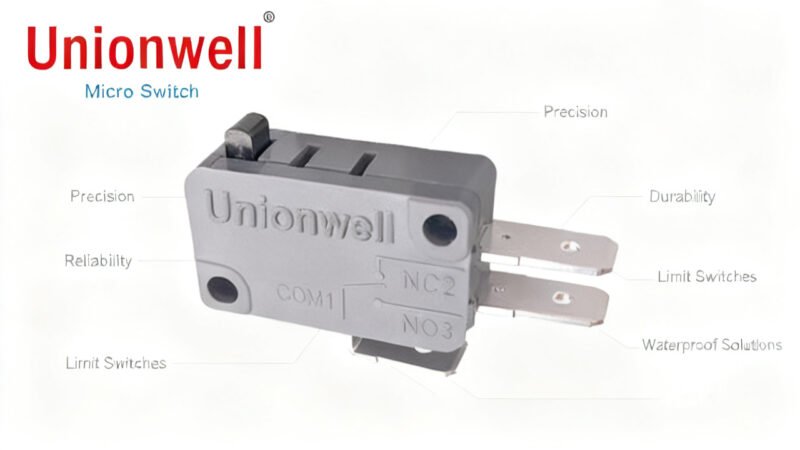
In the intricate landscape of modern industrial automation, the reliability of every component is paramount. Often overlooked, but undeniably critical, are micro switches. These compact, high-precision devices serve as the fundamental building blocks for control, safety, and operational efficiency across countless applications. From ensuring the safe operation of heavy machinery to providing tactile feedback in sophisticated electronics, understanding their capabilities and selecting the right type is crucial for any discerning engineer or procurement specialist.
Understanding Micro Switches: The Foundation of Control
A micro switch, also known as a miniature snap-action switch, is characterized by its small size and a snap-action mechanism. This mechanism ensures rapid, decisive contact closure or opening regardless of the speed of actuation. This ‘snap’ action is vital for preventing arcing and extending the switch’s operational life, making it a highly reliable component. As a leading micro switch manufacturer, companies like Unionwell focus on engineering these devices to deliver consistent performance under various operating conditions.
Key characteristics of micro switches include:
- High Precision: Accurate actuation points for precise control.
- Long Mechanical Life: Designed for millions of cycles.
- Rapid Action: Minimizes contact bounce and wear.
- Versatility: Available in numerous configurations (lever, roller, plunger, etc.).
The Specialization of Limit Switches
While all limit switches are essentially a type of micro switch, their application is highly specialized. A limit switch is an electromechanical device that detects the presence or absence of an object, or monitors the travel limits of moving parts within a machine. They are indispensable for:
- Position Sensing: Verifying the position of machine components (e.g., a robotic arm’s reach, a conveyor belt’s end).
- Safety Interlocks: Ensuring machine guards are closed or parts are in a safe position before operation can begin.
- Sequence Control: Initiating the next step in an automated process once a previous step is complete.
- Counting and Detection: Monitoring the flow of items on an assembly line.
The robust construction and reliable snap action of these switches make them ideal for demanding industrial environments where accurate feedback is non-negotiable.
Conquering Harsh Environments: The Imperative of waterproof micro switches
Not all industrial environments are clean and climate-controlled. Many applications expose critical components to moisture, dust, oils, and other contaminants. This is where the waterproof micro switch becomes an indispensable solution. Designed with advanced sealing technologies, these switches boast ingress protection (IP) ratings, such as IP67, signifying complete protection against dust ingress and the ability to withstand temporary immersion in water.
Applications demanding waterproof micro switches include:
- Outdoor Equipment: Agricultural machinery, construction vehicles, vending machines.
- Marine Applications: Boats, offshore platforms, underwater equipment.
- Food & Beverage Processing: Washdown areas requiring frequent cleaning.
- Automotive Industry: Engine compartments, door mechanisms, chassis applications.
- Medical Devices: Equipment requiring sterilization or operating in humid environments.
The integrity of the sealing material and the design of the switch housing are critical factors in ensuring long-term reliability in challenging conditions.
Key Considerations for Selecting the Right Switch
Choosing the appropriate micro, limit, or waterproof micro switch requires careful evaluation of several factors:
- Electrical Ratings: Ensure the switch can handle the required voltage and current for both AC and DC loads.
- Operating Force & Travel: Match the switch’s actuation force and pre-travel/over-travel characteristics to the application’s mechanical requirements.
- Contact Material: Different materials (e.g., silver alloy, gold plating) are suited for various load types and environmental conditions.
- Operating Temperature Range: Verify the switch can perform reliably within the application’s temperature extremes.
- Mechanical & Electrical Life: Specify a switch with a lifespan that meets or exceeds the application’s operational expectations.
- IP Rating: For harsh environments, select a waterproof micro switch with an appropriate IP rating.
- Mounting & Terminations: Consider the physical constraints and electrical connection methods.
- Certifications: Look for industry standards and certifications (e.g., UL, CE, CQC) to ensure compliance and safety.
Partnering with an Expert micro switch manufacturer
The quality and performance of micro switches, limit switches, and waterproof solutions are directly tied to the expertise of their manufacturer. A reputable micro switch manufacturer, such as unionwell micro switch, invests heavily in R&D, precision manufacturing processes, and rigorous quality control. This commitment ensures that their products not only meet but often exceed industry standards, providing engineers with reliable components that contribute to the overall robustness and longevity of their designs. Partnering with such a manufacturer ensures access to a wide range of standard products, custom solutions, and expert technical support.
Conclusion
Micro switches, limit switches, and their waterproof counterparts are indispensable components in the quest for industrial excellence. Their small size belies their immense impact on precision control, safety, and efficiency. By understanding their distinct features, applications, and critical selection criteria, businesses can make informed decisions that enhance product reliability, optimize operational performance, and safeguard investments in automation technology.