
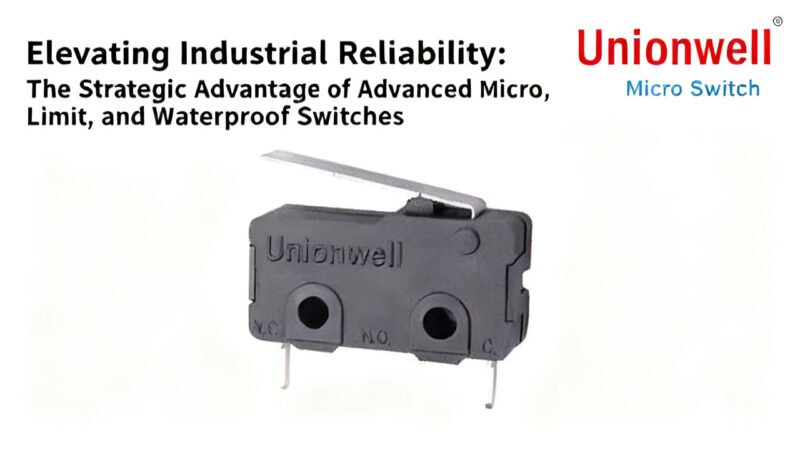
In the intricate world of industrial automation and control, precision switches are the unsung heroes, silently ensuring the reliable operation of countless machines and systems. Far from being simple on/off devices, modern micro, limit, and waterproof switches are sophisticated components engineered to deliver exact feedback, maintain safety protocols, and enable seamless automation. For B2B stakeholders – engineers, product designers, procurement specialists, and system integrators – understanding the nuances of these critical components and partnering with a reputable micro switch manufacturer is paramount to achieving operational excellence and longevity.
The Indispensable Micro Switch: Small Size, Monumental Impact
At its core, a micro switch is a snap-action electrical switch characterized by its rapid contact movement. This ‘snap-action’ mechanism ensures quick make-and-break of circuits, minimizing arcing and extending the switch’s operational life. Despite their often diminutive size, micro switches are incredibly versatile and robust, making them foundational in a vast array of applications:
- Automotive: Door interlocks, seatbelt detection, gear shift position.
- Home Appliances: Microwave oven door interlocks, washing machine controls, refrigerator ice makers.
- Industrial Control: Safety interlocks on machinery, control panel buttons, flow rate detection.
- Medical Devices: Precision control in diagnostic equipment, patient beds.
The reliability and precision of a micro switch directly impact the safety, efficiency, and overall performance of the end product. High-quality manufacturing ensures consistent operating force, precise travel, and a long mechanical and electrical life, translating into fewer failures and reduced downtime for industrial applications.
The Power of Precision: Limit Switches in Industrial Automation
A specialized form of micro switch, the limit switch, is engineered to detect the presence or absence of an object, or to monitor the end-of-travel limits of moving parts within a system. These mechanical sensors are indispensable for position sensing and safety interlocking in heavy-duty industrial environments. Their rugged construction and diverse actuator types (plunger, roller lever, rotary, etc.) allow them to withstand harsh conditions and provide reliable feedback.
Key applications for limit switches include:
- Robotics: Defining movement boundaries and home positions for robotic arms.
- CNC Machines: Ensuring precise tool positioning and preventing overtravel.
- Conveyor Systems: Detecting product presence, jam detection, and emergency stops.
- Safety Gates and Barriers: Verifying closure before machine operation can commence.
- Material Handling: Sensing the position of hoists, cranes, and automated guided vehicles (AGVs).
The strategic deployment of high-quality limit switches significantly enhances operational safety, improves process control accuracy, and contributes to the overall automation efficiency of complex industrial machinery.
Conquering Harsh Environments: The Imperative of waterproof micro switches
Many industrial settings are characterized by challenging environmental factors such as dust, moisture, oil, chemicals, and extreme temperatures. In such conditions, standard switches are prone to premature failure, leading to costly downtime and maintenance. This is where the waterproof micro switch becomes an absolute necessity.
Waterproof micro switches are designed with robust sealing mechanisms, often achieving high Ingress Protection (IP) ratings (e.g., IP67), indicating full protection against dust ingress and immersion in water up to 1 meter for a specified duration. These specialized switches utilize advanced sealing materials and construction techniques to prevent contaminants from reaching the internal contacts.
Critical applications for waterproof micro switches include:
- Outdoor Equipment: Agricultural machinery, construction vehicles, vending machines.
- Marine Applications: Shipboard controls, dockside equipment.
- Food & Beverage Processing: Equipment requiring frequent washdowns to maintain hygiene standards.
- Industrial Washdowns: Manufacturing plants where equipment is regularly cleaned with high-pressure water.
- Chemical Processing: Environments exposed to corrosive agents.
Investing in high-quality waterproof micro switches ensures extended operational life, reduces the frequency of replacements, and safeguards the integrity of critical systems operating in demanding conditions.
The Manufacturer’s Edge: Why Partnering with a Specialist Matters
For B2B buyers, the choice of a micro switch manufacturer is as critical as the selection of the switch itself. A leading manufacturer brings more than just components to the table; they offer a partnership founded on expertise, reliability, and innovation:
- Engineering Excellence: Deep understanding of switch mechanics, electrical characteristics, and material science to design durable and precise products.
- Rigorous Quality Control: Adherence to international standards (e.g., UL, ENEC, CQC) and comprehensive testing protocols to ensure consistent performance and safety.
- Customization Capabilities: The ability to tailor switches (actuator type, operating force, terminal options, housing materials) to meet specific application requirements.
- Technical Support & Application Guidance: Expert assistance in selecting the optimal switch for complex designs and troubleshooting.
- Supply Chain Reliability: Consistent product availability and efficient logistics to support uninterrupted production schedules.
Whether it’s a standard micro switch, a robust limit switch for heavy machinery, or a sealed waterproof micro switch for harsh environments, the quality and support from your manufacturer directly contribute to the success and reliability of your end products and systems.
Key Considerations for Optimal Switch Selection
When selecting micro, limit, or waterproof switches, consider the following:
- Electrical Ratings: Ensure the switch can handle the required voltage and current for both resistive and inductive loads.
- Actuator Type: Choose an actuator (plunger, roller, lever) suitable for the mechanical interface of your application.
- Operating Force: Match the required force to activate the switch with the available mechanical input.
- Environmental Resistance: Verify the IP rating, operating temperature range, and material compatibility for your specific environment.
- Mechanical & Electrical Life: Select switches with a life expectancy that meets or exceeds the product’s design life.
- Mounting & Terminations: Consider ease of installation and compatibility with your existing system.
Conclusion
In the relentless pursuit of industrial efficiency and reliability, the role of precision switches cannot be overstated. From the discreet snap of a micro switch to the steadfast detection of a limit switch, and the unyielding protection of a waterproof variant, these components are vital for ensuring performance, safety, and longevity in diverse applications. Partnering with a specialized micro switch manufacturer that prioritizes quality, innovation, and customer support is not merely a purchasing decision; it is a strategic investment in the enduring success and dependability of your industrial systems.