
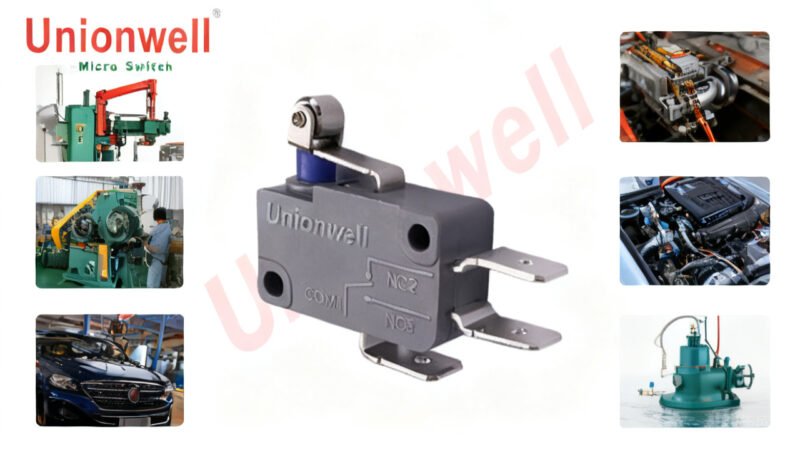
In the intricate world of modern industrial and commercial operations, precision, reliability, and safety are paramount. Often, the unsung heroes ensuring these critical factors are micro switches. These compact, electromechanical devices, despite their diminutive size, play an indispensable role in countless applications, from safeguarding industrial machinery to enabling the seamless operation of everyday appliances. For B2B stakeholders, understanding the nuances of micro switch technology, including specialized variants like limit switches and waterproof models, is crucial for optimizing system performance, enhancing product longevity, and ensuring compliance with stringent industry standards.
At its heart, a micro switch, also known as a miniature snap-action switch, is an electrical switch actuated by very little physical force, utilizing a snap-action mechanism to provide rapid and decisive contact closure or opening. This snap-action ensures that the contact force is independent of the actuator speed, preventing slow make/break conditions that can lead to arcing and premature wear. Key characteristics include high repeatability, a definitive operating point, and a compact design, making them ideal for applications requiring precise position detection or end-of-travel sensing.
The fundamental principle involves a carefully designed internal spring mechanism that stores energy as the actuator is depressed. Once a specific operating point is reached, the stored energy is rapidly released, causing the contacts to “snap” from one position to another. This rapid transition minimizes contact bounce and electrical noise, contributing significantly to the switch’s electrical life and reliability. Available in various configurations—Normally Open (NO), Normally Closed (NC), or Changeover (SPDT)—micro switches offer versatility for diverse control circuit designs.
Beyond the Basics: Limit Switches for Enhanced Control
While all limit switches are, in essence, a type of micro switch, they are specifically engineered for robust industrial environments to detect the presence or absence of an object, or to monitor the position of moving parts. Encased in durable housings, often metal, limit switches are designed to withstand harsh conditions, including dust, moisture, and mechanical impact. Their primary function is to provide feedback to a control system about the physical limits of motion or the status of a mechanical process.
Common applications for limit switches include safety interlocks on machinery doors, ensuring equipment cannot operate when guards are open; controlling the movement of robotic arms or conveyor belts; detecting the position of components in automated assembly lines; and initiating or terminating cycles in manufacturing processes. Their reliability in providing precise positional feedback makes them fundamental components in industrial automation, contributing directly to operational efficiency and worker safety.
Defying the Elements: The Imperative of waterproof micro switches
Many industrial and outdoor applications expose electronic components to challenging environmental conditions, including water, dust, oil, and corrosive chemicals. In such scenarios, standard micro switches would quickly fail, leading to costly downtime and safety hazards. This is where waterproof micro switches become indispensable. These specialized switches are designed with enhanced sealing mechanisms—such as epoxy potting, O-rings, and rubber gaskets—to prevent ingress of contaminants.
Waterproof micro switches are typically rated according to the Ingress Protection (IP) system, with IP67 being a common standard, signifying complete protection against dust and the ability to withstand temporary immersion in water up to 1 meter deep for 30 minutes. Applications range from outdoor security systems and marine equipment to food processing machinery, medical devices, and automotive systems where exposure to liquids or wash-down procedures is routine. Their robust construction ensures uninterrupted operation and extended lifespan in environments where conventional switches would quickly degrade.
Precision, Durability, and Longevity: Hallmarks of Quality
The performance of any industrial system is only as strong as its weakest link. For micro switches, quality translates directly into the precision of operation, the durability under stress, and the longevity of service. Precision ensures consistent and repeatable actuation, critical for accurate control and reliable feedback in automated systems. High-quality micro switches are engineered with tight tolerances, ensuring minimal variation in operating force and pre-travel over millions of cycles.
Durability is achieved through the selection of robust materials for the housing, actuator, and internal contacts, coupled with meticulous manufacturing processes. Reputable manufacturers employ advanced alloys for contacts to minimize wear and maximize current handling capabilities, and use high-grade plastics or metals for housings that resist impact, vibration, and temperature extremes. Longevity, or mechanical life, often measured in millions of operations, is a testament to the design and material integrity, directly impacting the total cost of ownership by reducing maintenance and replacement frequency.
Critical Applications Across Industries
The versatility of micro switches makes them ubiquitous across a vast array of industries:
- Automotive: Used in door latches, seatbelt detection, gear shift mechanisms, power window controls, and engine management systems.
- Industrial Automation: Essential for robotics, CNC machinery, conveyor systems, safety gates, and automated assembly lines.
- Home Appliances: Found in microwaves (door interlocks), washing machines (lid switches), refrigerators (ice makers), and vacuum cleaners.
- Medical Devices: Critical for patient beds, diagnostic equipment, infusion pumps, and surgical tools, where reliability is non-negotiable.
- Aerospace: Employed in landing gear position sensors, cockpit controls, and various fluid flow and pressure monitoring systems.
- HVAC Systems: Used for damper control, fan speed regulation, and filter monitoring.
Partnering with the Right Manufacturer: A Strategic Advantage
For B2B buyers, the choice of a micro switch manufacturer is a strategic decision that extends beyond mere product specifications. A leading manufacturer brings expertise in research and development, offering innovative designs and custom solutions tailored to specific application requirements. They adhere to rigorous quality control protocols, often holding certifications such as UL, CE, and RoHS, ensuring products meet global safety and environmental standards.
Furthermore, a reliable manufacturer provides comprehensive technical support, assisting clients with optimal switch selection, integration challenges, and troubleshooting. Their commitment to consistent supply chain management guarantees product availability, minimizing lead times and preventing production delays. Partnering with a manufacturer known for quality and innovation ensures access to cutting-edge technology and robust components that enhance the performance and reliability of your end products.
Selecting the Optimal Micro Switch: Key Considerations
Choosing the right micro switch requires careful evaluation of several critical parameters:
- Electrical Rating: Ensure the switch can safely handle the required voltage and current for both resistive and inductive loads.
- Actuation Force and Travel: Match these to the mechanical constraints and operational requirements of your application.
- Operating Temperature Range: Verify the switch can perform reliably within the environmental temperature extremes.
- Contact Material: Silver contacts are common for general-purpose applications, while gold plating is preferred for low-current, high-reliability circuits to prevent oxidation.
- Enclosure Protection (IP Rating): Select an appropriate IP rating based on the presence of dust, moisture, or liquids in the operating environment.
- Mechanical and Electrical Life: Consider the expected number of operations over the product’s lifespan to ensure the switch meets durability requirements.
- Mounting Style and Actuator Type: Choose a configuration that integrates seamlessly with your mechanical design, such as lever, plunger, roller, or simulated roller actuators.
In conclusion, micro switches, in all their forms—standard, limit, and waterproof—are foundational components driving the functionality, safety, and efficiency of modern industrial and commercial systems. Their compact design belies their critical role in ensuring precise control, reliable sensing, and robust operation across diverse and demanding applications. By understanding the capabilities of these essential devices and partnering with a reputable manufacturer, businesses can leverage superior component quality to achieve unparalleled performance, enhance product integrity, and maintain a competitive edge in today’s technologically advanced landscape.