
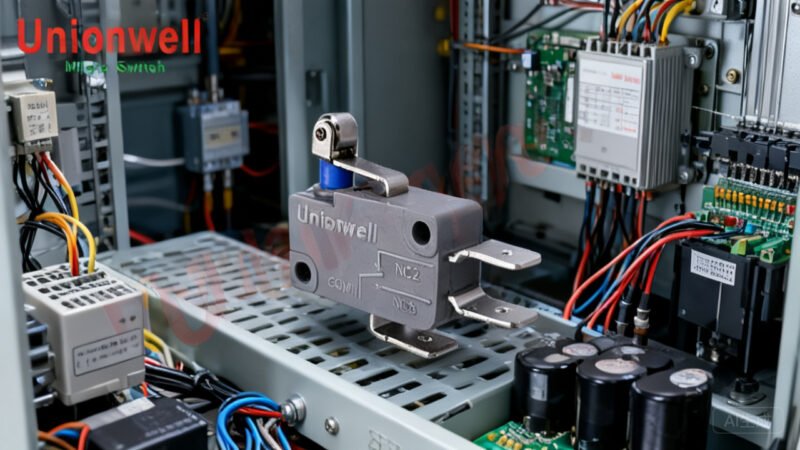
In the intricate landscape of modern industrial automation, seemingly small components often play the most pivotal roles. Among these, the micro switch stands out as an indispensable element, silently ensuring precision, safety, and reliability across a vast array of applications. From factory floor machinery to complex medical devices, these compact, snap-action switches are the unsung heroes that translate mechanical movement into electrical signals, orchestrating the seamless operation of countless systems. For engineers, procurement specialists, and system integrators, understanding the nuances of micro switch technology and partnering with a reputable micro switch manufacturer is not just advantageous—it’s critical for operational success and longevity.
What Defines a Micro Switch?
At its core, a micro switch is a small, electromechanical switch characterized by its snap-action mechanism. This unique design ensures that the contact transfer is quick and decisive, regardless of the speed of the actuator. This rapid changeover minimizes arcing, thereby extending the switch’s electrical life and enhancing its reliability. Typically, a micro switch consists of a spring-loaded lever or plunger that, when actuated, causes a rapid transfer of contacts from one position to another. Their compact size, high repeatability, and robust construction make them ideal for applications requiring precise position sensing or simple ON/OFF control.
Key Micro Switch Types and Their Industrial Significance
The versatility of micro switches is evident in their various specialized forms, each engineered to meet specific industrial demands.
Standard Industrial Micro Switches
These are the workhorses of general industrial applications. Designed for durability and consistent performance, they come with a wide range of actuator types—plunger, lever, roller lever, and more—to accommodate diverse mechanical interfaces. They are commonly found in control panels, safety interlocks, vending machines, and various appliances, providing reliable feedback and control signals.
Limit Switches: The Sentinels of Automation
A specialized form of micro switch, limit switches are fundamental to industrial automation and safety systems. Their primary function is to detect the presence or absence of an object, monitor the end-of-travel of moving parts, or verify the position of components within a machine. In CNC machines, conveyor systems, robotic arms, and industrial doors, limit switches provide crucial feedback, preventing overtravel, initiating sequential operations, or triggering safety shutdowns. They are built to withstand heavy-duty use and often feature robust housings and sealing to endure harsh industrial environments.
waterproof micro switches: Defying the Elements
In environments where moisture, dust, or other contaminants are prevalent, standard switches simply won’t suffice. This is where waterproof micro switches become indispensable. Engineered with specialized sealing mechanisms, often achieving IP (Ingress Protection) ratings like IP67, these switches are designed to prevent the intrusion of water, dust, and other particles. Applications include marine equipment, outdoor power tools, automotive under-hood systems, food processing machinery, and industrial wash-down areas. The integrity of their sealing is paramount, ensuring continuous operation and preventing costly downtime or safety hazards in challenging conditions.
The Unionwell Advantage: A Commitment to Quality Manufacturing
When it comes to sourcing high-performance micro switches, the expertise of the micro switch manufacturer is paramount. Companies like Unionwell stand at the forefront, offering a comprehensive range of solutions that meet the stringent demands of modern industry. A unionwell micro switch is synonymous with precision engineering, rigorous quality control, and a commitment to innovation. As a leading manufacturer, Unionwell invests heavily in research and development to produce switches that not only meet but exceed international standards such as UL, CE, and RoHS. Their product portfolio encompasses everything from standard industrial switches to specialized limit switches and highly durable waterproof micro switches, often with customizable options to fit unique application requirements. Partnering with such a manufacturer ensures not only access to a broad product line but also reliable technical support and a robust supply chain.
Selecting the Optimal Micro Switch for Your Application
Choosing the right micro switch requires a careful evaluation of several critical factors:
- Environmental Conditions: Consider temperature range, humidity, vibration, shock, and the presence of dust or corrosive agents. This is where a waterproof micro switch or a sealed limit switch becomes crucial.
- Electrical Requirements: Match the switch’s voltage and current ratings to your application’s load type (resistive, inductive, lamp load).
- Mechanical Life & Operating Force: Determine the expected number of actuation cycles and the available force to operate the switch.
- Actuator Type: Select an actuator (plunger, lever, roller) that best interfaces with the mechanical movement it needs to detect.
- Contact Configuration: Common options include SPDT (Single Pole Double Throw), SPST-NO (Normally Open), and SPST-NC (Normally Closed).
- Mounting Options: Ensure compatibility with your system’s design (panel mount, PCB mount, screw mount).
- Compliance & Certifications: Verify that the switch meets relevant industry standards and safety certifications.
The Future Landscape of Micro Switches
The evolution of micro switch technology continues, driven by demands for greater efficiency, smaller footprints, and enhanced intelligence. Future trends include further miniaturization to enable more compact designs, integration with IoT and Industry 4.0 systems for predictive maintenance and remote monitoring, and the development of even more robust materials for extreme operating conditions. As industries push the boundaries of automation, the role of high-performance micro switches will only grow in importance.
Conclusion
Micro switches, whether standard, limit switch, or waterproof micro switch variants, are foundational components that underpin the reliability and safety of countless industrial systems. Their precise snap-action, durability, and adaptability make them indispensable in an era defined by automation and intelligent control. For businesses seeking to optimize their operations and ensure long-term performance, the strategic choice of a high-quality micro switch from a trusted micro switch manufacturer like Unionwell is not merely a purchase—it’s an investment in the integrity and efficiency of their entire industrial ecosystem.