
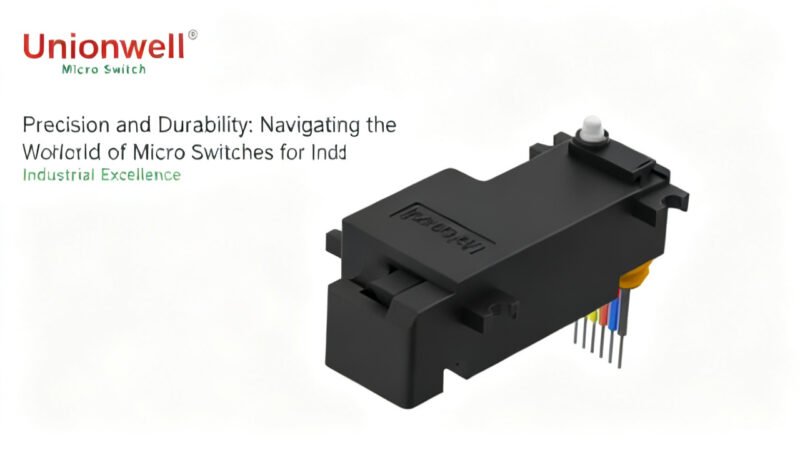
In the intricate landscape of modern industrial automation and control, the seemingly small micro switch plays an outsized role in ensuring precision, reliability, and safety. These electromechanical devices are the silent workhorses behind countless operations, from simple ON/OFF functions to complex sequencing and safety interlocks. For businesses operating in manufacturing, automotive, medical, and countless other sectors, understanding the nuances of micro switch technology and partnering with a reputable micro switch manufacturer is paramount to achieving operational excellence and reducing costly downtime.
At its heart, a micro switch, also known as a miniature snap-action switch, is designed for rapid, decisive switching action with minimal travel. This characteristic snap-action mechanism ensures a quick make-or-break contact, reducing arcing and extending the switch’s operational life. Their compact size, high repeatability, and ability to handle various electrical loads make them indispensable components in a vast array of equipment.
Key Types and Their Applications
Standard Micro Switches: Versatility and Precision
Standard micro switches are the foundational element, offering robust performance in a compact footprint. They are highly versatile and can be found in everyday appliances, vending machines, security systems, and industrial control panels. Their precision makes them ideal for applications requiring accurate position sensing or end-of-travel detection.
Limit Switches: The Sentinels of Position
Limit switches are a specialized form of micro switch, often encased in a more rugged housing, designed specifically to detect the presence or absence of an object, or to monitor the limits of travel for moving parts. They are fundamental to industrial automation, machine safety, and process control. Common applications include conveyor systems, machine tools, and heavy machinery, where they provide critical feedback for automated sequences and emergency stops. Their robust construction often allows them to withstand harsh industrial environments, making them a reliable choice for demanding tasks.
waterproof micro switches: Resisting the Elements
For applications exposed to moisture, dust, oils, or other contaminants, waterproof micro switches are indispensable. These switches are engineered with specialized seals and robust housings to achieve high Ingress Protection (IP) ratings, such as IP67 or even IP68. This protection ensures reliable operation in challenging environments like outdoor equipment, marine applications, food processing plants, and automotive systems where exposure to liquids or fine particulate matter is common. A high-quality waterproof micro switch prevents short circuits, corrosion, and operational failures, thereby extending equipment lifespan and ensuring uninterrupted performance.
Critical Selection Criteria for Industrial Applications
Choosing the correct micro switch is not a trivial task. It requires a thorough understanding of the application’s specific demands and the switch’s technical specifications. Key considerations include:
- Electrical Ratings and Load Type: Evaluate the voltage, current, and type of load (resistive, inductive, capacitive) the switch will handle. Overloading can lead to premature failure.
- Actuator Type and Operating Force: Micro switches come with various actuators (pin plungers, roller levers, hinge levers, simulated roller levers, etc.). The choice depends on the mechanism it needs to interact with and the required operating force.
- Environmental Considerations: For outdoor or harsh indoor environments, consider switches with appropriate IP ratings, temperature ranges, and resistance to chemicals or vibration. A robust waterproof micro switch is essential in such scenarios.
- Material and Construction Durability: The housing material, contact material, and internal spring mechanism all contribute to the switch’s longevity and performance under stress.
- Lifecycle and Reliability: Industrial applications demand switches with high mechanical and electrical lifespans to minimize maintenance and downtime. Look for specifications on the number of cycles the switch is rated for.
- Compliance and Certifications: Ensure the switch meets relevant industry standards and safety certifications (e.g., UL, CE, CQC) pertinent to your geographical market and application.
The Role of a Trusted micro switch manufacturer
The reliability of your systems hinges significantly on the quality of components you integrate. Partnering with an experienced micro switch manufacturer is crucial. A reputable manufacturer offers:
- Consistent Quality: Adherence to strict manufacturing processes and quality control standards ensures consistent performance and reliability across batches.
- Technical Expertise and Support: Access to engineering support can be invaluable for custom solutions, troubleshooting, and selecting the optimal switch for unique applications.
- Broad Product Portfolio: A diverse range of standard, limit, and waterproof micro switches means you can find the exact component to meet your specific needs.
- Innovation and Customization: Leading manufacturers continuously innovate, offering new designs and the ability to customize switches for highly specialized requirements.
For example, manufacturers specializing in components like the unionwell micro switch often provide extensive catalogs and detailed specifications, enabling engineers to make informed decisions. Their focus on precision engineering ensures that whether you need a standard miniature switch or a heavy-duty limit switch, the component will perform reliably in its intended environment.
Broadening Horizons: Applications Across Industries
Micro switches are not confined to a single industry. Their adaptability makes them critical in:
- Automotive: Door latches, seat belt detection, gear shift mechanisms.
- Medical Devices: Diagnostic equipment, patient beds, fluid dispensing systems.
- HVAC Systems: Damper control, fan speed detection, safety interlocks.
- Consumer Electronics: Appliance controls, power tools, gaming devices.
- Industrial Automation: Robotics, CNC machines, conveyor systems, packaging equipment, and safety gates where limit switches are indispensable.
- Security Systems: Tamper detection, door/window sensors.
The ability of a waterproof micro switch to withstand harsh cleaning agents or outdoor exposure further expands its utility in food processing, marine, and construction equipment.
Conclusion: Strategic Component Selection for Future-Proof Systems
In a world where efficiency and uptime are paramount, the strategic selection of micro switches is more critical than ever. Far from being commodity items, these components are integral to the performance, safety, and longevity of industrial systems. By meticulously evaluating the technical requirements of your application, understanding the distinct advantages of various switch types—from standard precision models to rugged limit switches and highly protected waterproof micro switches—and collaborating with a trusted micro switch manufacturer, businesses can ensure their systems are built for enduring excellence. Investing in quality components from a reliable source is an investment in the future reliability and success of your operations.