
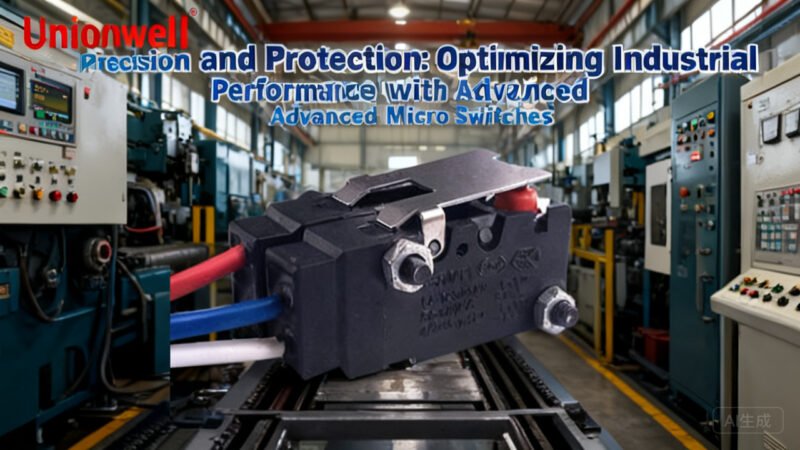
In the intricate world of industrial automation, where precision, reliability, and safety are paramount, certain components work tirelessly behind the scenes, ensuring seamless operation. Among these critical elements, micro switches stand out as fundamental building blocks. These compact, high-precision devices are the silent workhorses that detect positions, control circuits, and safeguard machinery across a vast spectrum of applications, from heavy industry to consumer electronics. For B2B buyers and engineers, understanding the nuances of advanced micro switches and selecting the right manufacturer is not just a preference, but a strategic imperative for operational excellence and long-term cost efficiency.
Understanding the Heart of Control: What is a Micro Switch?
At its core, a micro switch, often referred to as a miniature snap-action switch, is an electrical switch actuated by very little physical force, utilizing a tipping-point mechanism to achieve rapid and decisive contact closure or opening. This ‘snap-action’ mechanism ensures that the contact force is independent of the actuator’s speed, leading to consistent performance, minimal arcing, and an extended operational lifespan. Their small size, high durability, and precise actuation make them ideal for applications requiring repeatable and reliable switching in confined spaces. From simple on/off functions to complex interlocking systems, micro switches provide the sensory input that drives modern machinery.
Key Types and Their Applications in Industrial Environments
The versatility of micro switches is evident in their diverse forms, each engineered for specific operational demands:
Standard Micro Switches: The Foundation of Control
These are the ubiquitous versions found in countless devices. Characterized by their compact size, high repeatability, and robust electrical ratings, standard micro switches are essential for general-purpose applications. They are commonly used in:
- Control Panels: For operator input and system feedback.
- Appliances: Detecting door closures, water levels, or temperature limits.
- Vending Machines & POS Systems: Ensuring accurate product dispensing and transaction processing.
- Safety Interlocks: Preventing operation when guards are open or covers removed.
Their reliability makes them a go-to choice for designers seeking dependable switching solutions where extreme environmental conditions are not the primary concern.
Limit Switches: The Sentinels of Motion
Limit switches are specialized micro switches designed to detect the presence or absence of an object, or to monitor the limits of machine travel. They are rugged, often enclosed in robust housings, and feature a variety of actuators (roller levers, plungers, whiskers) to suit different mechanical interfaces. Their critical role in industrial automation includes:
- Machine Tools: Controlling the end-of-travel for axes, ensuring precise positioning.
- Robotics: Defining operational envelopes and preventing collisions.
- Conveyor Systems: Detecting product flow, jams, or positioning.
- Safety Gates & Barriers: Confirming closure before machinery can operate.
The precision and durability of a high-quality limit switch are crucial for maintaining machine accuracy, protecting equipment, and ensuring worker safety in dynamic industrial settings.
waterproof micro switches: Defying the Elements
When operations move into harsh environments where moisture, dust, oils, or corrosive substances are present, standard switches simply won’t suffice. waterproof micro switches are engineered with advanced sealing technologies, often achieving high IP (Ingress Protection) ratings (e.g., IP67 or IP68), to prevent contaminants from compromising their internal mechanisms. Their robust construction ensures reliable performance in challenging conditions, making them indispensable for:
- Outdoor Equipment: Construction machinery, agricultural vehicles, and utility infrastructure.
- Marine Applications: Shipboard controls, offshore platforms, and dockside equipment.
- Food & Beverage Processing: Where regular washdowns and sanitation are required.
- Automotive & Transportation: Engine compartments, chassis controls, and heavy-duty vehicles.
- Medical Devices: Sterilizable equipment and diagnostic tools.
The integrity of the sealing mechanism is paramount, directly impacting the longevity and safety of the application in demanding environments.
Critical Selection Criteria for B2B Buyers and Engineers
Choosing the right micro switch goes beyond mere functionality; it involves a meticulous evaluation of several key parameters to ensure optimal performance, longevity, and compliance:
- Reliability and Durability: Look for high mechanical and electrical life ratings. The quality of internal contacts, spring mechanisms, and housing materials directly influences the switch’s lifespan and consistency.
- Precision and Repeatability: The ability of the switch to actuate at precisely the same point, cycle after cycle, is critical for applications requiring tight tolerances, especially in robotics and automated assembly.
- Environmental Resistance: For demanding conditions, evaluate IP ratings, operating temperature ranges, vibration resistance, and chemical compatibility.
- Electrical Ratings: Ensure the switch’s current and voltage ratings match or exceed application requirements. Consider contact configurations (NO, NC, SPDT, DPDT) and contact material for specific load types (e.g., gold contacts for low current signals).
- Operating Force and Actuator Type: Select an operating force appropriate for the application to prevent premature wear or insufficient actuation. Choose from a wide array of actuators—pin plungers, roller levers, simulated rollers, panel mount plungers—to match the mechanical interface.
- Certifications and Compliance: Verify compliance with international standards such as UL, cUL, ENEC, CE, and RoHS. These certifications are crucial for market access and demonstrate adherence to safety and environmental regulations.
- Customization Capabilities: For unique applications, partnering with a manufacturer that offers design flexibility and custom solutions can provide a significant competitive advantage, optimizing performance and integration.
The Manufacturer’s Edge: Why Partnership Matters
For industrial buyers, the choice of micro switch manufacturer is as crucial as the product itself. A leading micro switch manufacturer distinguishes itself through:
- Rigorous Quality Control: Adherence to stringent manufacturing processes and testing protocols ensures consistent product quality and reliability across large volumes.
- Research and Development: Continuous innovation in materials science, sealing technologies, and contact designs leads to more durable, precise, and application-specific switches.
- Technical Expertise and Support: A manufacturer with deep engineering knowledge can offer invaluable guidance on switch selection, application integration, and custom solution development, acting as a true technical partner.
- Scalable Production and Supply Chain Reliability: The ability to meet high-volume demands with consistent quality and on-time delivery is essential for maintaining production schedules and minimizing downtime.
Conclusion: Investing in Quality for Uninterrupted Performance
Micro switches, whether standard, limit, or waterproof, are far more than simple electrical components; they are critical enablers of industrial efficiency, safety, and innovation. By understanding their diverse capabilities and carefully considering the factors that influence their performance, B2B buyers can make informed decisions that safeguard their investments and enhance their operational capabilities. Partnering with a reputable micro switch manufacturer that prioritizes quality, innovation, and customer support is not just about procuring parts; it’s about securing a foundation for reliable, precise, and protected industrial performance for years to come.