
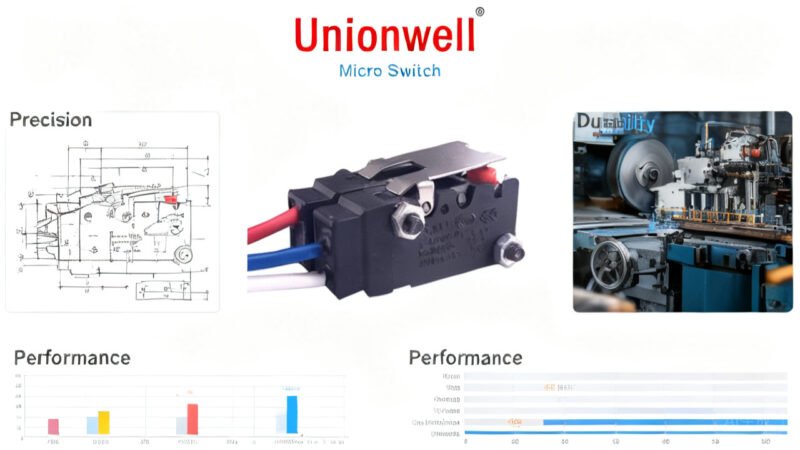
In the intricate landscape of modern industrial automation, consumer electronics, and specialized machinery, certain components operate silently yet are absolutely critical to functionality and safety. Among these unseen heroes are micro switches. These small, highly sensitive electromechanical devices are fundamental to countless applications, providing the precise control and feedback mechanisms that drive efficiency and reliability. For B2B enterprises, understanding the nuances of micro switch technology, from standard designs to specialized variants like limit switches and waterproof models, and partnering with a reputable micro switch manufacturer, is paramount to achieving operational excellence and ensuring product integrity.
Understanding the Core: What is a Micro Switch?
At its heart, a micro switch, also known as a miniature snap-action switch, is an electrical switch actuated by very little physical force, utilizing a snap-action mechanism to rapidly change contact states. This rapid change ensures a reliable, consistent electrical connection or disconnection, minimizing arcing and extending the switch’s lifespan. Their design typically includes an actuator (such as a lever, plunger, or roller), a spring mechanism, and electrical contacts enclosed within a compact housing. The precision and repeatability of their operation make them indispensable across a vast array of industries.
Key Types and Their Indispensable Applications
The Versatility of Standard Micro Switches
Standard micro switches form the backbone of many control systems. They are found in everyday items like vending machines, home appliances, and safety interlocks, as well as in more complex industrial equipment. Their primary function is to detect position, presence, or to act as an on/off control based on mechanical input. Their compact size allows for integration into tight spaces, making them a preferred choice for designs where spatial constraints are a concern. Key characteristics often include a high number of operating cycles and a variety of actuator options to suit diverse mechanical interfaces.
Limit Switches: Defining Boundaries in Industrial Automation
A specialized form of micro switch, the limit switch, is engineered for robust industrial environments where precise position sensing is critical. Limit switches are designed to detect the presence or absence of an object, or to monitor the travel limits of moving machinery. They are integral to safety systems, automated assembly lines, robotic arms, and material handling equipment, preventing over-travel and ensuring machinery operates within predefined parameters. Their rugged construction often includes metal housings and sealed designs to withstand harsh conditions, making them a cornerstone of reliable industrial automation.
waterproof micro switches: Resilience in Challenging Environments
When operational integrity is threatened by moisture, dust, or corrosive agents, waterproof micro switches become essential. These switches are specifically designed with enhanced sealing mechanisms, often achieving high Ingress Protection (IP) ratings (e.g., IP67, IP68), to prevent contaminants from compromising their internal components. Applications requiring waterproof micro switches are widespread, including automotive systems (door latches, window controls), marine equipment, outdoor power tools, medical devices requiring sterilization, and industrial machinery exposed to washdowns or extreme weather. The ability of these switches to maintain performance in wet or dusty conditions significantly enhances equipment reliability and longevity, reducing maintenance costs and downtime.
The Critical Role of a Reliable micro switch manufacturer
For B2B buyers, the choice of a micro switch manufacturer significantly impacts the quality, performance, and longevity of their end products. A leading manufacturer understands the stringent demands of industrial and commercial applications, prioritizing precision engineering, robust materials, and rigorous quality control. They offer a comprehensive range of products, including standard, limit, and waterproof micro switches, often with customizable options to meet unique specifications. Manufacturers like Unionwell, for instance, are recognized for their commitment to innovation, consistent product quality, and adherence to international standards such as UL, CE, and RoHS. Partnering with such a manufacturer ensures access to reliable components, expert technical support, and a stable supply chain, which are all vital for maintaining production schedules and product reputation.
Key Considerations When Selecting Micro Switches
Choosing the right micro switch requires a careful evaluation of several factors:
- Actuator Type: Plunger, lever, roller lever, simulated roller, etc., depending on the mechanical interface.
- Electrical Ratings: Voltage and current capabilities must match the application’s power requirements.
- Operating Force: The amount of force required to actuate the switch, critical for sensitive applications.
- Mechanical and Electrical Life: The expected number of cycles the switch can perform, indicating durability.
- Environmental Resistance: Temperature range, vibration resistance, and IP rating for dust and moisture protection.
- Mounting Options: Panel mount, PCB mount, screw mount, etc., for seamless integration.
- Certifications: Compliance with industry standards (UL, CE, RoHS, etc.) for safety and market acceptance.
Diverse Applications Across Industries
Micro switches are indispensable across an impressive spectrum of industries:
- Industrial Automation: Position sensing, safety interlocks, control panels.
- Automotive: Door latches, seatbelt buckles, gear shift sensors, power window controls.
- HVAC Systems: Damper controls, fan activation, safety cut-offs.
- Medical Devices: Precision control in diagnostic equipment, patient beds, surgical tools.
- Consumer Electronics: Buttons, detection mechanisms in cameras, printers, and smart devices (as components for manufacturers).
- Security Systems: Tamper detection, door/window sensors.
The Future of Micro Switch Technology
The evolution of micro switch technology continues, driven by demands for greater miniaturization, enhanced durability, and intelligent integration. Future developments are likely to include even more precise actuation, higher current ratings in smaller packages, and integration with smart sensing capabilities for IoT applications. As industries push the boundaries of automation and product design, the humble micro switch will undoubtedly evolve to meet these new challenges, remaining a cornerstone of reliable electromechanical control.
Conclusion
Micro switches, in their various forms—standard, limit, and waterproof—are far more than simple on/off devices; they are critical components that ensure precision, safety, and reliability across virtually every industrial and commercial sector. For B2B companies, selecting the appropriate micro switch and partnering with a distinguished micro switch manufacturer is a strategic decision that directly impacts product performance, operational efficiency, and long-term success. By understanding the diverse functionalities and considering key selection criteria, businesses can leverage the power of these miniature marvels to build more robust, efficient, and safer systems.