
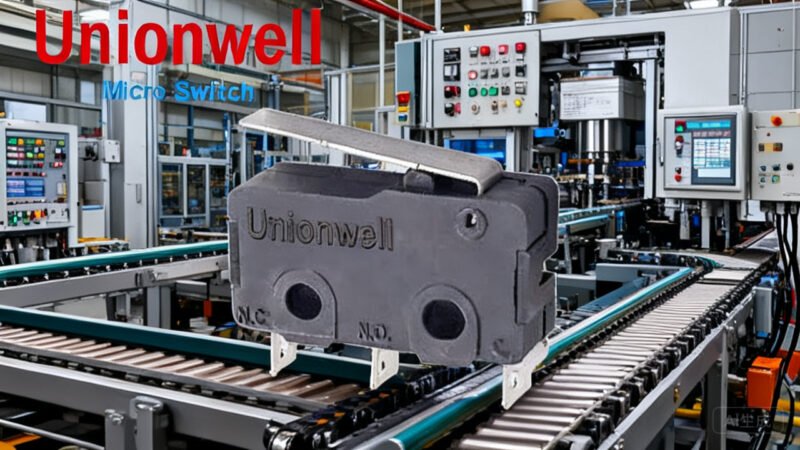
In the intricate ecosystem of modern industrial automation and control systems, seemingly small components often play the most pivotal roles. Among these, micro switches stand out as indispensable guardians of precision, safety, and operational efficiency. These compact, snap-action devices are the unsung heroes that enable countless machines and systems to function reliably, from the simplest consumer electronics to the most complex manufacturing lines.
A micro switch, by definition, is a small, highly sensitive snap-action switch, characterized by its rapid change of state from one contact position to another. This instantaneous action is critical for minimizing arcing and ensuring consistent performance over millions of cycles. Their robust design, coupled with high repeatability, makes them ideal for applications requiring accurate position sensing, limit detection, and user interface control.
The versatility of micro switches is evident across a vast spectrum of industries. In the automotive sector, they are crucial for door latches, seat belt indicators, and transmission control. Within industrial machinery, they serve as safety interlocks, position sensors for robotic arms, and control mechanisms in conveyor systems. Even in everyday appliances, micro switches ensure the safe and precise operation of microwaves, washing machines, and HVAC units.
Partnering with a Premier micro switch manufacturer
The reliability of any system is directly linked to the quality of its components. When it comes to micro switches, selecting a reputable manufacturer is paramount. A leading micro switch manufacturer distinguishes itself through several key attributes:
- Unwavering Quality Control: Adherence to stringent international standards like ISO 9001, UL, cUL, ENEC, and CE certifications ensures products meet global benchmarks for safety and performance.
- Precision Engineering: Utilizing advanced manufacturing techniques and high-grade materials guarantees consistent actuation force, minimal differential travel, and exceptional mechanical and electrical life.
- Innovation and R&D: Continuous investment in research and development allows for the creation of new products that address evolving industry demands, such as miniaturization, enhanced durability, and specialized environmental protection.
- Customization Capabilities: The ability to tailor switch specifications—including actuator types, terminal configurations, electrical ratings, and housing materials—to meet unique application requirements.
- Technical Expertise and Support: Providing comprehensive technical data, application guidance, and responsive customer service to assist engineers in selecting the optimal switch for their designs.
Choosing a manufacturer with a proven track record ensures not only high-performance components but also a reliable supply chain and expert partnership throughout the product lifecycle.
Specialized Application: The Indispensable Limit Switch
Within the broad category of micro switches, the limit switch holds a particularly significant position in industrial automation. A limit switch is specifically designed to detect the presence or absence of an object, or to monitor the position of moving parts within a defined range. They are electromechanical devices operated by physical contact with a moving part.
Key Characteristics and Applications of Limit Switches:
- Position Sensing: Essential for determining the end-of-travel for machinery, ensuring components stop at precise points.
- Safety Interlocks: Critical for preventing machinery from operating when guards are open or when components are not in a safe position, thereby protecting personnel and equipment.
- Counting and Sequencing: Used to count items on a conveyor belt or to initiate the next step in an automated sequence.
- Robust Construction: Often designed with heavy-duty housings and sealed components to withstand harsh industrial environments, including dust, vibration, and temperature extremes.
The accuracy and repeatability of limit switches are non-negotiable in applications like CNC machines, robotics, material handling systems, and automated assembly lines, where even slight deviations can lead to significant operational inefficiencies or safety hazards.
Conquering Adversity: The waterproof micro switch
Many industrial and outdoor applications expose electronic components to challenging environmental conditions, including moisture, dust, oil, and corrosive substances. In such scenarios, standard micro switches simply won’t suffice. This is where the waterproof micro switch becomes an absolute necessity.
Waterproof micro switches are engineered with advanced sealing technologies to protect their internal mechanisms from ingress. Their effectiveness is typically quantified by an Ingress Protection (IP) rating, with IP67 and IP68 being common standards for high levels of protection against dust and water immersion. This superior protection ensures reliable operation and extended lifespan in environments where conventional switches would quickly fail.
Applications Demanding Waterproof Micro Switches:
- Outdoor Equipment: Agricultural machinery, construction vehicles, vending machines, and outdoor lighting systems.
- Marine Applications: Boats, offshore platforms, and dockside equipment where exposure to salt water is constant.
- Food and Beverage Processing: Equipment requiring frequent washdowns and exposure to cleaning agents.
- Medical Devices: Sterilization equipment, diagnostic tools, and patient care systems that require high levels of hygiene.
- Automotive: Engine compartments, chassis controls, and exterior lighting systems.
Investing in high-quality waterproof micro switches significantly reduces downtime, maintenance costs, and the risk of component failure, thereby enhancing the overall safety and reliability of the system.
Critical Considerations for Selecting the Right Micro Switch
Choosing the optimal micro switch for an application involves a careful evaluation of several technical parameters:
- Electrical Ratings: Ensure the switch can safely handle the required voltage and current for both AC and DC loads.
- Operating Force and Travel: Match these to the mechanical actuation mechanism to ensure reliable and consistent operation.
- Mechanical and Electrical Life: Specify switches with a lifespan that exceeds the expected operational cycles of the end product.
- Operating Temperature Range: Verify the switch can perform reliably within the ambient temperature extremes of the application.
- Environmental Protection (IP Rating): Select an appropriate IP rating based on the presence of dust, moisture, or other contaminants.
- Actuator Type: Choose from various actuator styles (pin plunger, lever, roller lever, simulated roller) to suit the physical interaction required.
- Terminal Configuration: Consider solder, quick-connect, PCB, or wire lead terminals for ease of integration.
- Certifications: Confirm the switch meets all necessary industry and safety standards for the target market.
Conclusion
Micro switches, whether standard, limit, or waterproof variants, are foundational elements in ensuring the precision, safety, and longevity of countless industrial and commercial systems. Their compact size belies their immense impact on operational reliability. By understanding the critical role these components play and by partnering with a trusted micro switch manufacturer that prioritizes quality, innovation, and customer support, engineers and product designers can confidently build systems that perform optimally, even in the most demanding environments. The choice of a superior micro switch is not merely a component selection; it is an investment in the enduring performance and integrity of your entire system.