
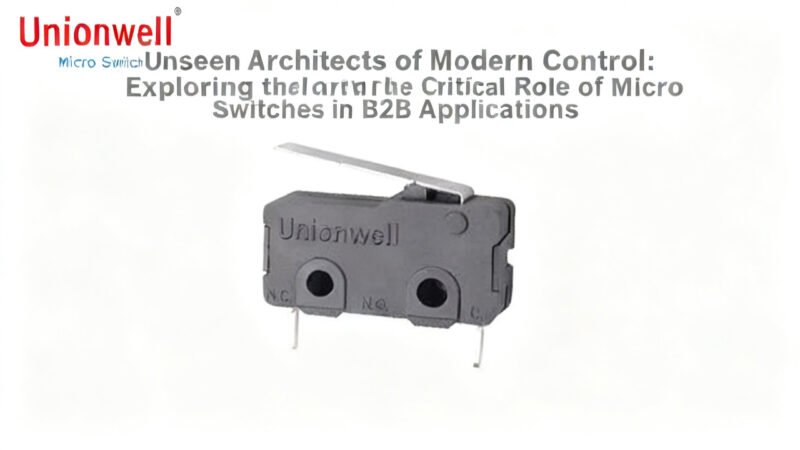
In the intricate landscape of modern industrial automation, consumer electronics, and specialized machinery, certain components operate silently yet are absolutely indispensable. Among these, the micro switch stands out as a foundational element, a testament to precision engineering that enables countless devices to function reliably and safely. Often underestimated due to its compact size, the micro switch is, in fact, a critical component that dictates the operational integrity and safety of systems ranging from complex industrial robots to everyday household appliances.
A micro switch, or miniature snap-action switch, is an electrical switch actuated by very little physical force, utilizing a snap-action mechanism. This mechanism ensures a rapid and definitive change in contact state, regardless of the speed of the actuator. This “snap” action is crucial for preventing arcing and extending the switch’s electrical life, making it highly reliable for repetitive operations. Typically, micro switches feature a small actuating button or lever and are enclosed in a compact housing, making them ideal for applications where space is limited but precise control is paramount.
Key Characteristics Driving Reliability and Performance
The widespread adoption of micro switches across diverse industries is attributed to several inherent characteristics:
- Precision and Repeatability: The snap-action mechanism ensures a consistent actuation point with minimal hysteresis, providing high precision and repeatability over millions of cycles.
- Durability and Long Life: Designed for high mechanical and electrical endurance, quality micro switches can withstand millions of operations, making them suitable for long-term, high-frequency applications.
- Compact Size: Their small footprint allows for integration into tight spaces, enabling miniaturization in product design.
- Versatility: Available in a multitude of configurations, actuator types (pin plunger, lever, roller lever), and contact forms (normally open, normally closed, changeover), micro switches can be tailored to specific application requirements.
- High Current Capacity: Despite their small size, many micro switches are capable of switching significant electrical loads.
Specialized Applications: Limit Switches and Waterproof Solutions
While the standard micro switch serves a broad range of applications, two specialized variants highlight their adaptability and critical importance:
Limit Switches: The Sentinels of Automation
A limit switch is essentially a micro switch designed for industrial applications, primarily used to detect the presence or absence of an object, or to monitor the travel limits of moving machinery. They are fundamental to automation systems, providing critical feedback for:
- Position Sensing: Determining the precise position of a machine part, such as a robotic arm, conveyor belt, or gate.
- Safety Interlocks: Ensuring machinery only operates when safety guards are in place or when certain conditions are met, preventing accidents.
- Sequence Control: Initiating or terminating a process step based on the physical presence or position of a component.
Robustly built, limit switches often feature heavy-duty enclosures and various actuator types designed to withstand harsh industrial environments, making them indispensable in manufacturing, material handling, and process control.
waterproof micro switches: Engineered for Extreme Environments
For applications exposed to moisture, dust, oils, or other contaminants, standard switches are insufficient. This is where waterproof micro switches become vital. Engineered with advanced sealing technologies, these switches boast high Ingress Protection (IP) ratings (e.g., IP67, IP68), signifying their resistance to dust and immersion in water. Their critical applications include:
- Automotive Industry: Used in car door locks, window controls, gear shifters, and engine compartments where exposure to moisture is common.
- Marine Applications: Essential for boat controls, bilge pumps, and navigation systems that must withstand saltwater environments.
- Outdoor Industrial Equipment: Found in construction machinery, agricultural equipment, and outdoor security systems where weather resistance is paramount.
- Medical Devices: Certain medical equipment requires sterilization and protection against fluid ingress.
The ability of waterproof micro switches to maintain operational integrity under challenging conditions ensures system reliability and prevents costly failures and safety hazards.
The Imperative of Choosing a Reputable micro switch manufacturer
The performance and longevity of any micro switch heavily depend on the quality of its design and manufacturing. Partnering with a reputable micro switch manufacturer is paramount for B2B clients, as it ensures:
- Rigorous Quality Control: Manufacturers employing stringent quality management systems ensure consistent product performance and adherence to international standards. This includes comprehensive testing for mechanical life, electrical life, contact resistance, and environmental resilience.
- Innovative R&D: Leading manufacturers invest in research and development to produce new designs, improve existing technologies, and offer customized solutions for unique application requirements. This often includes developing switches with higher IP ratings, wider operating temperature ranges, or specialized actuation forces.
- Technical Expertise and Support: A reliable manufacturer provides expert technical assistance, helping clients select the optimal switch for their specific needs, troubleshoot issues, and understand complex specifications.
- Certifications and Compliance: Products from established manufacturers typically carry necessary certifications (e.g., UL, CQC, ENEC), ensuring compliance with safety and environmental regulations across different markets.
- Supply Chain Reliability: For B2B operations, a consistent and reliable supply chain is crucial, minimizing production delays and ensuring continuity.
Manufacturers like Unionwell, for instance, are known for their dedication to precision engineering and robust testing protocols, offering a broad portfolio of micro switches, including specialized limit and waterproof models, that meet diverse industrial demands.
Key Considerations for Selecting the Right Micro Switch
To ensure optimal performance and longevity, several factors must be carefully evaluated when selecting a micro switch:
- Electrical Ratings: Match the switch’s voltage and current ratings to the load it will control. Overloading can lead to premature failure.
- Mechanical Life and Electrical Life: Consider the expected number of operating cycles. High-frequency applications demand switches with superior endurance.
- Operating Force: The force required to actuate the switch is critical, especially in sensitive applications or those involving human interface.
- Operating Temperature Range: Ensure the switch can reliably perform within the expected ambient temperatures of the application environment.
- Environmental Protection (IP Rating): For harsh conditions, select switches with appropriate IP ratings to protect against dust, water, and other contaminants.
- Actuator Type: Choose an actuator (e.g., pin plunger, lever, roller lever, simulated roller lever) that best suits the mechanical interface and actuation mechanism of your system.
- Mounting Options: Verify the switch’s mounting style (e.g., PCB mount, panel mount, chassis mount) is compatible with your design.
- Contact Configuration: Determine if Normally Open (NO), Normally Closed (NC), or Changeover (SPDT) contacts are required for your circuit logic.
Conclusion
Micro switches, whether standard, limit, or waterproof, are more than just simple electrical components; they are critical enablers of precision, safety, and reliability across virtually every industry. Their compact design belies their profound impact on system functionality. For B2B enterprises, understanding the nuances of micro switch technology and partnering with a reputable manufacturer is not merely a purchasing decision—it is a strategic investment in the performance, safety, and longevity of their products and operations. By carefully considering application requirements and technical specifications, businesses can harness the full potential of these tiny but mighty devices.