
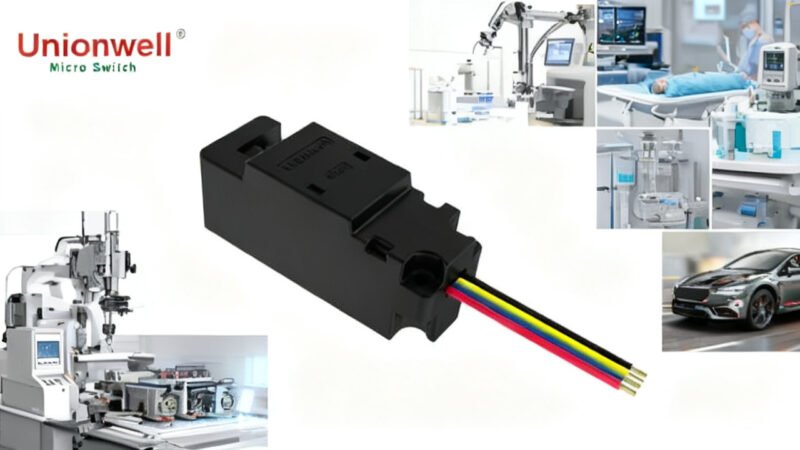
Introduction: The Ubiquitous Unsung Hero
In the intricate machinery of modern industry, certain components operate tirelessly behind the scenes, their presence often unnoticed until their absence grinds operations to a halt. Among these critical, yet often overlooked, elements is the micro switch. These compact, high-precision devices are the silent architects of countless automated processes, ensuring safety, accuracy, and reliability across an astonishing array of applications. For any enterprise involved in manufacturing, automation, or product design, understanding the capabilities and selection criteria for micro switches is not just beneficial; it is essential for operational excellence and competitive advantage.
Understanding the Micro Switch Mechanism
At its core, a micro switch, often referred to as a miniature snap-action switch, is an electromechanical device designed to open or close an electrical circuit with a rapid, decisive action, regardless of the speed of the actuator. This ‘snap-action’ mechanism is crucial. It minimizes arcing between contacts, extending the switch’s operational lifespan and enhancing electrical reliability. Typically, a micro switch consists of a spring-loaded lever or plunger that, when activated by a small amount of force, quickly changes the state of its internal contacts from normally open (NO) to normally closed (NC) or vice-versa. Their small size, combined with their robust electrical performance, makes them ideal for integration into tight spaces and critical control loops.
Key Characteristics and Advantages
The widespread adoption of micro switches stems from several inherent advantages:
- Precision and Repeatability: They offer highly consistent operating points, ensuring precise control and repeatable performance over millions of cycles.
- Durability and Long Life: Engineered for endurance, many micro switches boast mechanical lives exceeding tens of millions of operations, making them highly reliable for continuous use.
- Compact Size: Their small footprint allows for integration into miniaturized equipment and crowded control panels, expanding design possibilities.
- Versatility: Available in a vast range of actuator styles, contact configurations, and electrical ratings, they can be tailored to specific application requirements.
- High Current Capacity: Despite their small size, many micro switches can handle significant electrical loads, making them suitable for direct control of motors and solenoids.
Specialized Micro Switches for Demanding Environments
While standard micro switches serve a broad spectrum of needs, specific applications demand enhanced features:
Limit Switches: The Sentinels of Position Control
A limit switch is essentially a robust form of a micro switch, specifically designed for industrial applications to detect the presence or absence of an object, or to monitor the limits of travel for moving parts. These switches are typically housed in rugged enclosures, protecting them from dust, oil, and impacts common in factory settings. Limit switches are indispensable in automation for safety interlocks, position sensing on conveyors, controlling machine tool travel, and ensuring proper sequencing in assembly lines. Their reliability in harsh conditions makes them the go-to choice for critical control functions where precision and durability are paramount.
waterproof micro switches: Defying the Elements
For applications exposed to moisture, dust, oils, or other contaminants, waterproof micro switches are indispensable. These switches are designed with sealed enclosures and specialized internal components to achieve various Ingress Protection (IP) ratings, such as IP67, indicating full protection against dust ingress and immersion in water up to 1 meter for 30 minutes. This level of protection ensures reliable operation in outdoor equipment, marine applications, food processing machinery, industrial washing systems, and medical devices where hygiene and environmental resistance are crucial. Selecting a waterproof micro switch with the appropriate IP rating is vital for long-term performance and safety in challenging environments.
Diverse Applications Across Industries
The versatility of micro switches is evident in their omnipresence across numerous sectors:
- Automotive: Found in door latches, seatbelt sensors, gear shifters, and power window controls.
- Industrial Automation: Essential for robotics, conveyor systems, safety gates, and machine tool position sensing (often using limit switches).
- Home Appliances: Integral to microwave oven doors, washing machines, refrigerators, and coffee makers.
- Medical Devices: Used in patient beds, infusion pumps, and diagnostic equipment for precise control and safety.
- Aerospace: Critical for landing gear, cabin door mechanisms, and flight control systems.
- HVAC Systems: Employed in damper controls, pressure switches, and fan interlocks.
Selecting the Right Micro Switch: A Manufacturer’s Guide
Choosing the optimal micro switch requires careful consideration of several factors:
- Electrical Ratings: Match the switch’s voltage and current ratings to the circuit’s requirements to prevent overload and ensure longevity.
- Operating Force: The force required to actuate the switch is critical for sensitive applications or those involving mechanical linkages.
- Actuator Type: Plunger, lever, roller lever, and simulated roller lever are common types, each suited for different actuation methods and mechanical interfaces.
- Environmental Conditions: Assess temperature ranges, presence of dust, moisture, or corrosive agents. This is where waterproof and high-temperature options become crucial.
- Contact Material: Different materials (e.g., silver, gold) are chosen based on current load and desired contact resistance.
- Certifications: Look for industry standards like UL, CE, RoHS compliance, ensuring safety and quality.
The Critical Role of a Reliable micro switch manufacturer
Partnering with a reputable micro switch manufacturer is paramount. A leading manufacturer brings not only a diverse product portfolio but also invaluable expertise in design, engineering, and quality control. They invest in rigorous testing, advanced manufacturing processes, and continuous innovation to deliver switches that meet stringent performance and reliability standards. This commitment ensures that the components you integrate into your products will perform consistently, reduce downtime, and ultimately enhance the reputation and safety of your own offerings. A strong manufacturer can also offer customization, technical support, and consistent supply, fostering a long-term, beneficial partnership.
Conclusion: Precision at Your Fingertips
Micro switches, in all their forms – from standard snap-action to robust limit switches and environmentally sealed waterproof variants – are foundational to the functionality and safety of countless modern devices and industrial systems. Their ability to deliver precise, repeatable, and reliable electrical control, often in challenging conditions, makes them indispensable. For businesses operating in an increasingly automated and interconnected world, a thorough understanding of these small but mighty components, coupled with a strategic partnership with a quality micro switch manufacturer, is key to building durable, efficient, and competitive products and systems. The unseen architects of precision are ready to power your next innovation.