
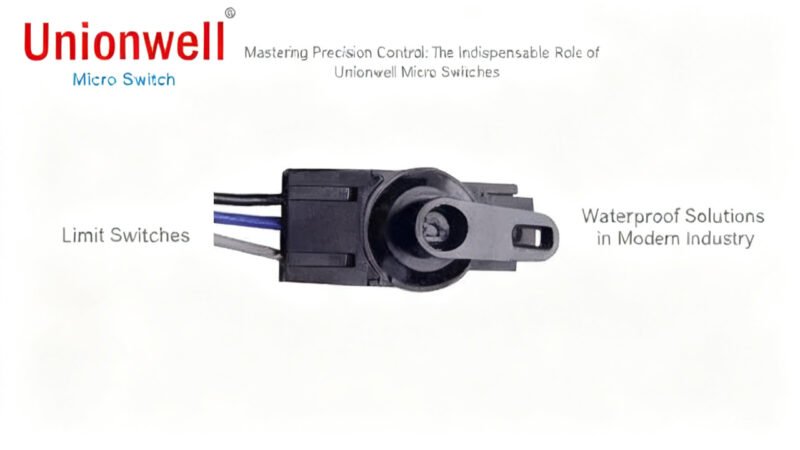
Micro switches are the unsung heroes of countless electronic and mechanical systems, providing critical control and feedback in applications ranging from consumer electronics to heavy industrial machinery. These compact, highly responsive devices are fundamental to ensuring precision, safety, and efficiency. As technological demands grow, so does the need for specialized variations, such as robust limit switches for position detection and resilient waterproof micro switches designed to withstand the harshest environments. In this intricate landscape, the role of a dedicated micro switch manufacturer becomes paramount, guiding industries towards optimal solutions. Unionwell stands at the forefront of this evolution, consistently delivering high-performance switching solutions tailored to the exacting requirements of modern engineering.
At its heart, a micro switch, also known as a miniature snap-action switch, is an electrical switch actuated by a very small physical force, producing a rapid and decisive change in electrical contact position. This “snap-action” mechanism is crucial, ensuring quick make-and-break operations regardless of the actuator’s speed. This characteristic minimizes arcing, extends contact life, and provides reliable switching. Their compact size, high durability, and precise operation make them indispensable across a vast spectrum of applications, from simple household appliances like microwaves and refrigerators to complex industrial control panels and automotive systems. The fundamental design allows for various actuator types – pin plungers, lever arms, roller levers – each suited for different mechanical interfaces and operational forces.
The Crucial Role of a micro switch manufacturer
The quality and reliability of a micro switch are directly tied to the expertise of its manufacturer. A reputable micro switch manufacturer like Unionwell doesn’t just produce components; they engineer solutions. This involves meticulous design, precision manufacturing, stringent quality control, and continuous innovation. Factors such as contact material, housing integrity, spring mechanism, and actuator design all contribute to the switch’s overall performance and longevity. Manufacturers must adhere to international standards, provide comprehensive technical support, and offer customization capabilities to meet unique client specifications. Investing in R&D to develop switches with higher electrical ratings, extended mechanical life, and improved environmental resistance is also key to staying competitive and serving evolving industry needs.
Precision in Position: The Limit Switch
A limit switch is a specialized type of micro switch designed to detect the presence or absence of an object, or to monitor the limits of its movement. Often housed in robust enclosures, limit switches are engineered to endure demanding industrial conditions, including vibrations, impacts, and temperature fluctuations. They typically feature various actuator styles, such as roller levers, plungers, or rotary heads, allowing them to interface with moving parts of machinery. Their primary function is to provide feedback to control systems, initiating or halting operations based on physical position. Common applications include ensuring safety interlocks on machine guards, controlling the travel limits of robotic arms, automating conveyor systems, and detecting the position of components in manufacturing lines. The reliability of a limit switch is paramount in preventing machinery damage, ensuring operator safety, and maintaining process accuracy.
Defying the Elements: waterproof micro switches
In environments where moisture, dust, and corrosive agents are present, standard micro switches simply won’t suffice. This is where waterproof micro switches become indispensable. These specialized switches are meticulously sealed to prevent the ingress of liquids and particulates, ensuring consistent and reliable operation even when exposed to splashes, sprays, or even temporary submersion. Their ingress protection (IP) rating, such as IP67 or IP68, indicates their level of resistance to solids and liquids. An IP67 rating, for instance, guarantees protection against dust ingress and temporary immersion in water up to 1 meter for 30 minutes. Applications for waterproof micro switches are diverse and critical, spanning the automotive industry (door latches, engine components), marine vessels, outdoor power tools, medical equipment requiring sterilization, and consumer appliances like washing machines and dishwashers. The robust sealing not only protects the internal contacts but also extends the operational life of the device in challenging conditions, reducing maintenance costs and improving system uptime.
Unionwell: A Commitment to Excellence and Innovation
As a leading micro switch manufacturer, Unionwell exemplifies a steadfast commitment to engineering excellence across its entire product portfolio, including standard micro switches, robust limit switches, and highly durable waterproof micro switches. Their extensive experience and advanced manufacturing processes ensure that every component meets rigorous quality standards and delivers exceptional performance. Unionwell’s dedication to innovation is evident in its continuous development of new products that address emerging industry requirements, from miniaturized designs for compact devices to high-current switches for heavy-duty applications. Clients benefit from Unionwell’s comprehensive support, including expert technical assistance, custom design services, and a global supply chain that ensures timely delivery. Choosing Unionwell means partnering with a manufacturer that prioritizes reliability, precision, and long-term value in every switch it produces, empowering industries to achieve their operational goals with confidence.
Key Considerations When Selecting a Micro Switch
Choosing the right micro switch involves evaluating several critical parameters to ensure optimal performance and longevity for your specific application. These include:
- Operating Force: The amount of force required to actuate the switch.
- Travel: The distance the actuator moves to operate the switch.
- Electrical Rating: The maximum current and voltage the switch can handle.
- Mechanical Life: The number of operations the switch can perform without failure.
- Operating Temperature Range: The environmental temperatures within which the switch can function reliably.
- Environmental Sealing (IP Rating): Crucial for harsh environments, indicating protection against dust and water.
- Actuator Type: The physical mechanism that interacts with the object or system (e.g., pin plunger, lever, roller).
- Contact Configuration: Normally Open (NO), Normally Closed (NC), or Changeover (SPDT).
Careful consideration of these factors will help engineers and designers select a switch that not only meets functional requirements but also withstands operational stresses over its intended lifespan.
Conclusion
Micro switches, in their various forms, remain foundational components in virtually every sector of modern industry. Whether it’s the precise snap-action of a standard micro switch, the robust position sensing of a limit switch, or the resilient protection offered by a waterproof micro switch, selecting the correct device from a reliable micro switch manufacturer is paramount. Unionwell’s commitment to quality, innovation, and customer support positions it as a trusted partner for businesses seeking dependable and high-performance switching solutions. By understanding the nuances of these critical components and collaborating with an expert manufacturer, industries can ensure the efficiency, safety, and longevity of their systems in an increasingly demanding technological landscape.