
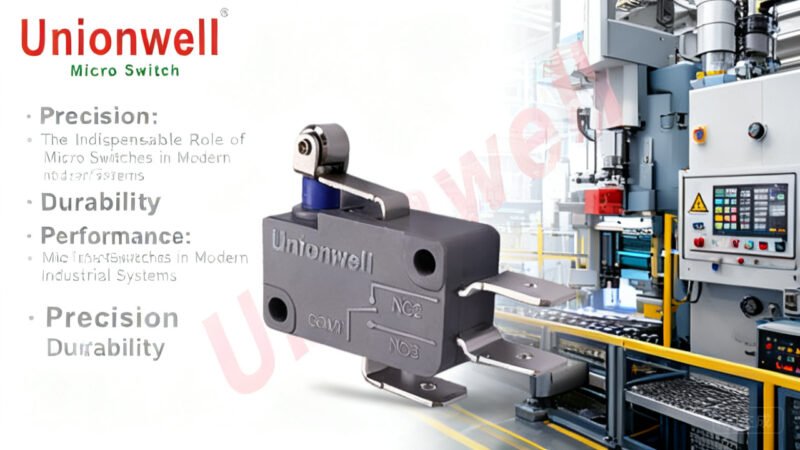
In the intricate world of industrial automation and control, certain components, though small in stature, play an outsized role in ensuring the precision, safety, and efficiency of operations. Among these, the micro switch stands as a foundational element, an unsung hero whose snap-action mechanism underpins countless critical functions across diverse sectors. From manufacturing lines and robotics to automotive systems and medical devices, the reliability of a micro switch directly translates to the performance and safety of the larger system it serves.
For B2B professionals navigating the complexities of component selection, understanding the nuances of micro switch technology – including standard designs, robust limit switches, and environmentally sealed waterproof variants – is paramount. This article delves into the core attributes that make these devices indispensable, the specialized applications they address, and the critical considerations for sourcing them from a reputable manufacturer.
Understanding Micro Switches: The Core of Control
At its heart, a micro switch is a small, sensitive snap-action switch that requires minimal force to operate. Its defining characteristic is the rapid transfer of electrical contacts from one position to another with a very small actuator movement. This ‘snap-action’ mechanism ensures a quick make-and-break operation, which is crucial for preventing arcing, extending contact life, and providing a crisp, tactile feedback. Typically comprising a spring-loaded lever or plunger, the switch rapidly changes state once the operating point is reached, ensuring highly repeatable performance.
This fundamental design allows micro switches to be used as detection devices, safety interlocks, position sensors, and control elements. Their inherent reliability and precision make them suitable for applications where exact timing and consistent operation are non-negotiable.
The Pillars of Performance: Key Attributes
The widespread adoption of micro switches in demanding industrial environments is a testament to their inherent strengths:
- Precision and Repeatability: The snap-action mechanism ensures that the switch always actuates and de-actuates at precisely the same point, even after millions of cycles. This high degree of repeatability is vital for applications requiring exact positioning and timing.
- Durability and Longevity: Engineered to withstand significant mechanical stress and countless operations, high-quality micro switches boast impressive mechanical and electrical lifespans, often exceeding millions of cycles. This longevity reduces maintenance costs and system downtime.
- Compact Footprint: Their small size allows for integration into tight spaces, making them ideal for miniaturized devices and complex machinery where space is at a premium.
- Versatility in Actuation: Available with a wide array of actuators—including pin plungers, roller plungers, lever arms, and simulated roller levers—micro switches can be adapted to various mechanical interface requirements.
- High Current Switching Capability: Despite their small size, many micro switches are designed to handle significant electrical loads, making them suitable for directly controlling motors, solenoids, and other power-hungry components.
Specialized Solutions for Demanding Environments
While standard micro switches form the backbone of many control systems, specific industrial challenges necessitate specialized variants:
Limit Switches: The Sentinels of Machine Safety
Limit switches are essentially heavy-duty micro switches encased in robust housings, designed to withstand harsh industrial conditions such as dust, moisture, vibration, and extreme temperatures. Their primary function is to detect the presence or absence of an object, or to monitor the limits of travel for moving parts in machinery. They are critical for:
- Machine Safety: Preventing over-travel, ensuring guards are closed, and enabling emergency stops.
- Position Sensing: Accurately determining the position of components in automated assembly lines, robotics, and CNC machinery.
- Material Handling: Controlling conveyor belts, sorters, and automated storage and retrieval systems.
The rugged construction of limit switches, often with high IP ratings (Ingress Protection) and metallic housings, makes them indispensable in heavy industrial applications where reliability under severe conditions is paramount.
waterproof micro switches: Defying the Elements
For applications exposed to liquids, dust, or other environmental contaminants, waterproof micro switches are the go-to solution. These switches are specifically engineered with advanced sealing techniques, such as epoxy potting, O-rings, and specialized housing materials, to achieve high IP ratings (e.g., IP67, IP68). This protection ensures consistent performance and extends operational life in challenging environments, including:
- Automotive: Door latches, gear shift mechanisms, engine compartment controls, and EV charging stations.
- Marine Equipment: Bilge pumps, navigation systems, and deck controls.
- Food Processing: Machinery requiring frequent washdowns and exposure to cleaning agents.
- Medical Devices: Sterilization equipment, patient monitoring systems, and diagnostic tools where hygiene is critical.
- Outdoor Equipment: Vending machines, security systems, and agricultural machinery.
The ability of waterproof micro switches to maintain electrical integrity in the presence of moisture and particulates is crucial for safety, compliance, and operational continuity in these sensitive sectors.
Selecting the Right Partner: Beyond the Component
The performance of micro switches, especially in mission-critical B2B applications, is heavily dependent on the quality and expertise of the manufacturer. When selecting a supplier, consider factors beyond just the technical specifications:
- Quality Assurance and Testing: A reputable manufacturer will adhere to stringent quality control processes, including extensive testing for durability, electrical performance, and environmental resistance. Look for certifications like ISO 9001.
- Material Science and Design Expertise: The choice of contact materials (e.g., silver alloy for high current, gold for low current), housing plastics, and sealing compounds significantly impacts performance and longevity. A manufacturer with deep engineering knowledge can offer optimal solutions.
- Customization Capabilities: Many industrial applications have unique requirements. A manufacturer capable of providing customized actuators, mounting options, or electrical configurations can be a valuable partner.
- Compliance and Certifications: Ensure switches comply with relevant industry standards such as UL, CE, RoHS, and REACH, which are vital for global market access and product safety.
- Technical Support and Supply Chain Reliability: Access to expert technical support for design integration and a reliable supply chain are crucial for project success and uninterrupted production.
The Future Landscape: Evolving Micro Switch Technology
As industries continue to evolve, so too does micro switch technology. Future trends point towards further miniaturization, enabling even smaller and more complex devices. Integration with smart systems, offering diagnostic capabilities and predictive maintenance features, is also on the horizon. Advances in material science will lead to even greater durability, higher temperature resistance, and enhanced environmental protection, ensuring micro switches remain at the forefront of precision control for decades to come.
Conclusion
Micro switches, in their various forms—standard, limit, and waterproof—are far more than simple electrical components; they are critical enablers of precision, safety, and efficiency across the industrial spectrum. For B2B stakeholders, understanding their fundamental role, appreciating their specialized capabilities, and partnering with a manufacturer committed to quality and innovation are key to building robust, reliable, and future-proof systems.