A DPDT limit switch (double pole double throw) contains two independent sets of changeover contacts driven by a single actuator. Each pole switches between a normally open (NO) and a normally closed (NC) contact, so one mechanical movement controls two separate circuits — for example stopping a drive motor while signalling a controller that the end position has been reached.
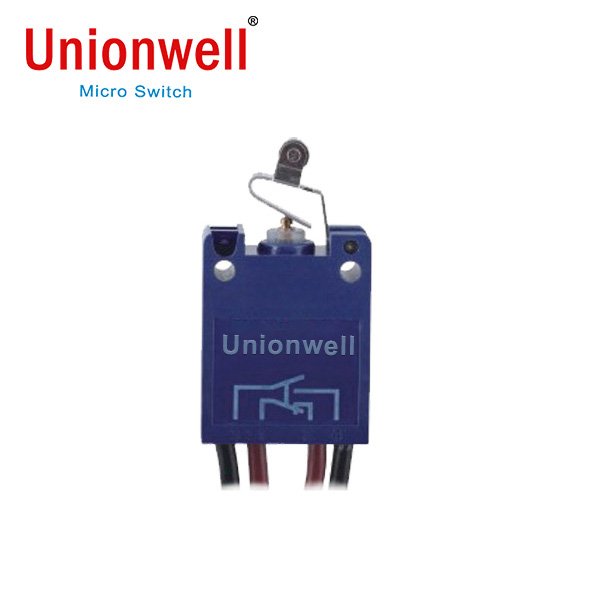
Palancas personalizadas, terminales y longitudes de alambre
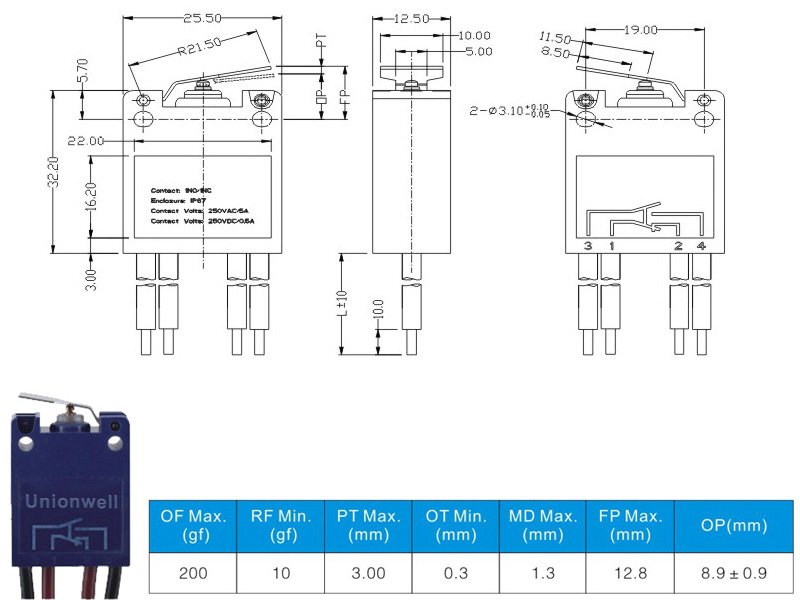
Especificaciones del interruptor de límites DPDT
What is a DPDT limit switch?
A DPDT limit switch (double pole double throw) contains two independent sets of changeover contacts driven by a single actuator. Each pole switches between a normally open (NO) and a normally closed (NC) contact, so one mechanical movement controls two separate circuits — for example stopping a drive motor while signalling a controller that the end position has been reached.
Unionwell DPDT limit switches pair a snap-action contact mechanism with a sealed or dustproof housing, giving repeatable operating points, low contact resistance and long mechanical life in industrial, appliance and automotive equipment.
How a DPDT limit switch works
Pressing the lever or plunger moves a common actuator blade. At the operating point the snap-action mechanism transfers both poles at once, so all six terminals change state together. Because the two poles are mechanically linked rather than electrically coupled, each can carry an independent circuit while staying synchronised — even after millions of operations.
Key specifications
The table below lists the electrical and mechanical characteristics of this DPDT limit switch. Ratings, operating force, lever type and sealing class can all be customised for volume projects.
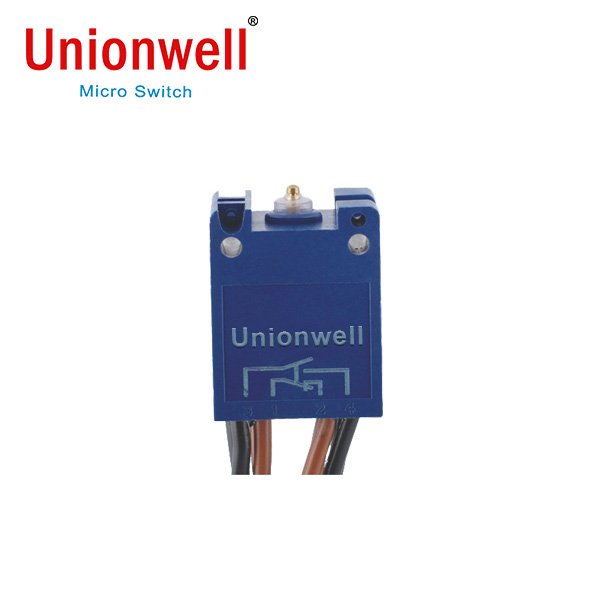
DPDT Limit Switch
Lugar de origen
Guangdong, China (Mainlandia)
Nombre de la marca
Unionwell
Número de modelo
G1105-35001D01E1U
Clasificación eléctrica
0.5A 250VDC
0,5A/5A 250VAC 5E4 μ 25T85
Fuerza de operaciones
350gf Max
Tipo de palanca
Longitud de 24 mm de ancho
Código de circuito
DPDT
Montaje del agujero Dimension
5.7mm*
Tipo de alambre
Líderes de alambre al fondo (Longitud de alambre 780mm)
DPDT stands for double pole double throw. The switch has two common terminals, and each one switches between a normally open and a normally closed contact, so a single actuator controls two circuits.
What is the difference between a DPDT switch and a DPST switch?
A DPST switch only opens and closes two circuits. A DPDT switch also has a second contact position per pole, so it can change a circuit over rather than simply break it.
Can Unionwell supply a custom DPDT limit switch?
Yes. Levers, terminals, cable lengths, operating force and sealing class are all customised for volume orders, and evaluation samples are available.
How do I confirm the right operating force?
Send the drawing or the target actuation force and travel. Our engineers will recommend a configuration and supply samples for testing.
Microswitch Limit Switch DPDT Waterproof Place Of Origin Guangdong, China (Mainland) Marca Nombre Unionwell Modelo Número G1105-45000D01E1U Electrical bulbhellip;